
Estimated reading time: 14 minutes
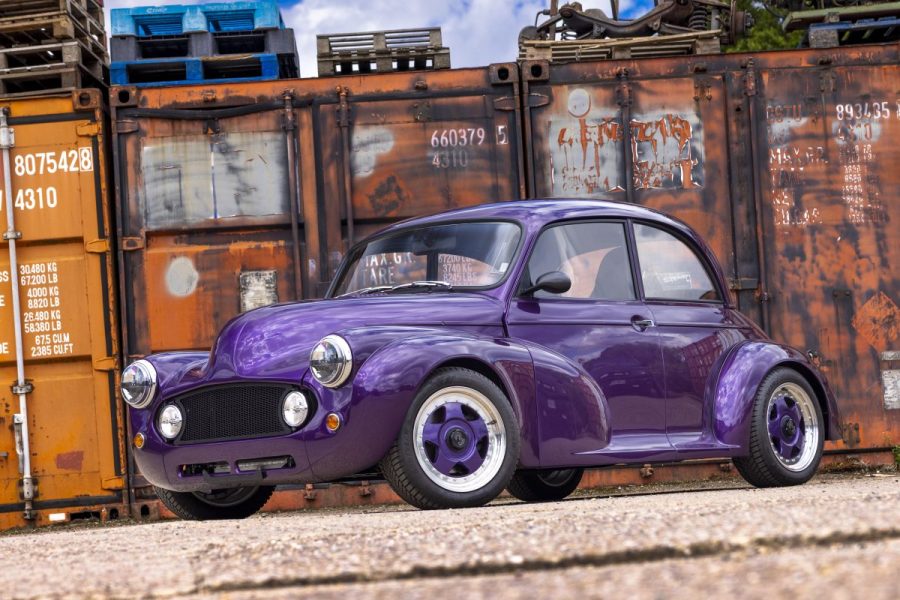
At first glance, this looks like a beautifully styled Morris Minor with a bit of attitude. Look closer, though, and you realise this Morris Minor restomod is something far more serious. Built by Retro Power, it reimagines the classic Minor as a modern-day interpretation of a ’70s hot rod, blending MX-5 running gear, Ford Zetec power, custom steel bodywork and a genuinely usable interior with air conditioning and Bluetooth. In other words, it’s the sort of build that keeps the soul of a classic while quietly deleting most of the bits that make old cars hard work. The brief was simple enough: create a Minor with proper performance, real road manners and a strong nod to period hot-rod styling. The execution, as you’d expect from Retro Power, is on another level entirely. As featured in our Build Masters series sponsored by Gtechniq, check out the video below!
Meet the Morris Minor restomod with almost no Minor underneath
We haven’t had many Morris Minors on the channel, and after seeing this one, that suddenly feels like a mistake. Or maybe it doesn’t, because calling this simply a Morris Minor is a bit like calling a Singer 911 “a tidy old Porsche”. Technically true, but it misses the point rather spectacularly.
This is a Morris Minor restomod built by Retro Power, and while it absolutely keeps the visual spirit of the original car alive, underneath it’s been transformed into something much more sophisticated. The idea wasn’t to restore a Minor back to factory spec. It was to reinterpret the car through the lens of a ’70s hot rod, but do it with the sort of engineering, finish and usability that make sense today.
A modern take on a ’70s-style hot rod
The owner behind the build is a big Morris Minor fan with a particular affection for the sort of custom Minors that were popular back in the 1970s. You know the sort — bright colours, slot mags, a touch of hot-rod attitude and usually a bit more ambition than actual quality. That vibe formed the heart of the brief, but the execution had to be completely modern.
The aim was to create a car that kept the look and charm of those period customs, but with proper performance, usable road manners and a few creature comforts thrown in. Something that could keep up with modern traffic, feel genuinely nice to drive and still look like the sort of car that would have stopped people in their tracks decades ago.
That’s exactly what Retro Power delivered.
How Retro Power reimagined the Morris Minor body
Widened steel arches and handmade rear wings
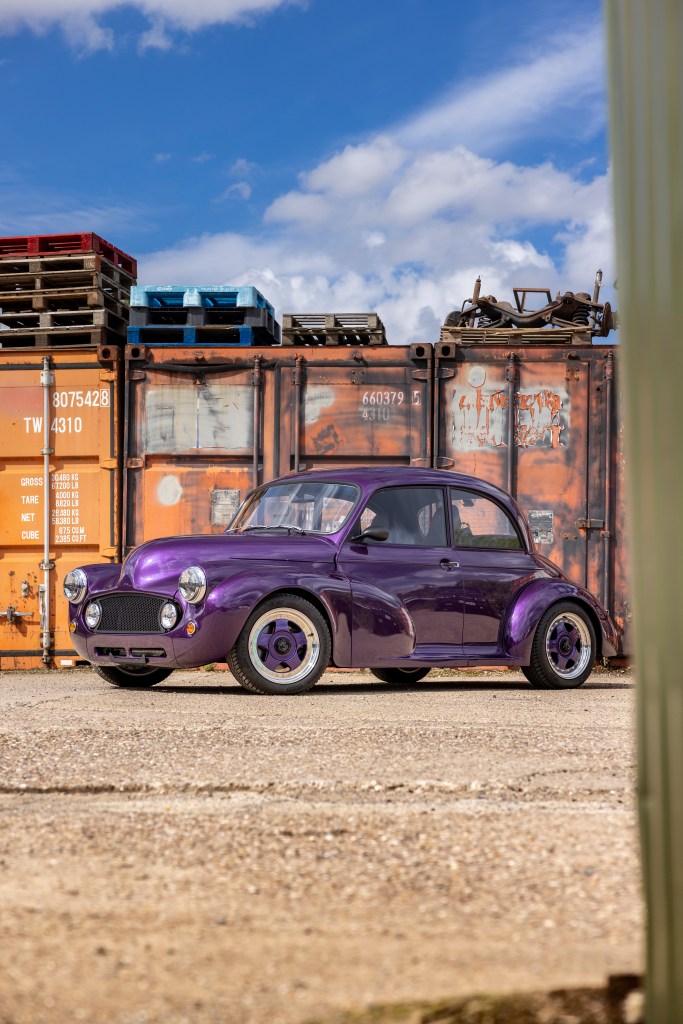
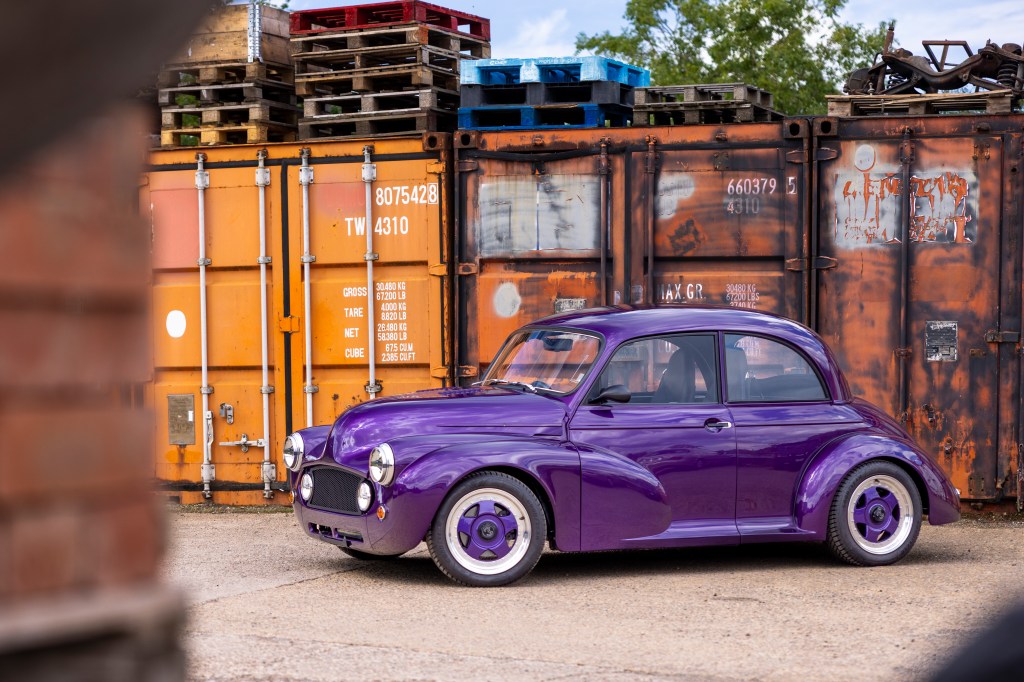
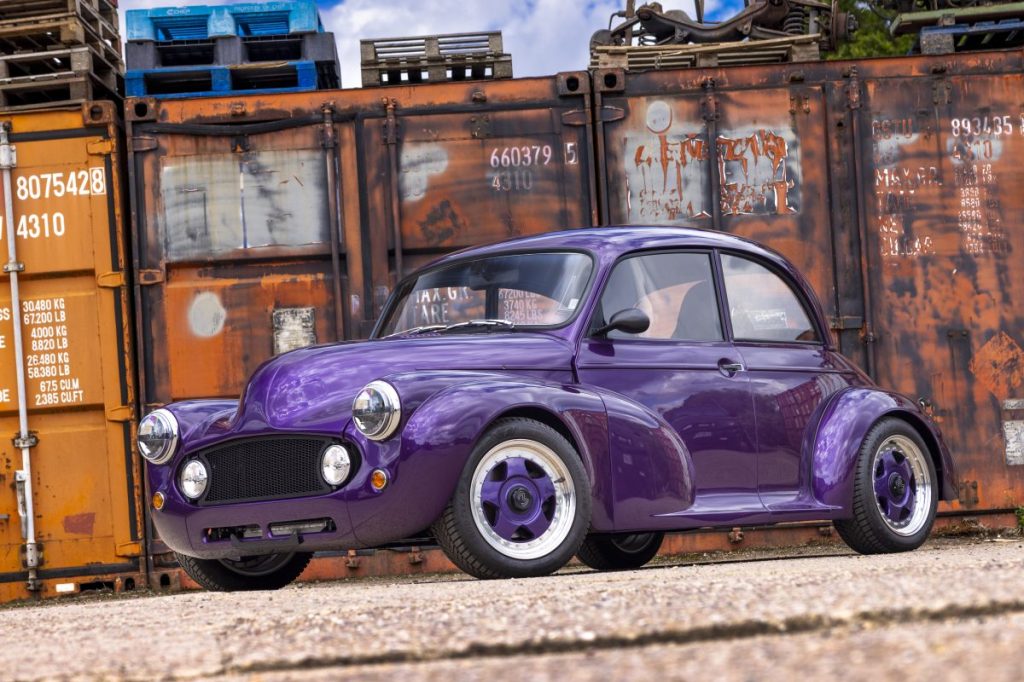
The body is where this car first tells you it means business. The overall silhouette stays loyal to the Morris Minor shape, but the proportions have been pushed harder everywhere. To suit the wider MX-5-based running gear and achieve the stance the owner wanted, the car was widened by nearly 100mm per arch, front and rear.
That’s not just a case of rolling the lips and hoping for the best. The front wings were reworked from the swage line outward, using foam modelling to develop the shape before the final steel sections were fabricated and grafted into the original panels. Out back, the rear wings were made entirely from scratch in steel. No original Morris panelwork remains in those sections at all.
It’s old-school coachbuilding mixed with modern design process, and it’s exactly the sort of thing Retro Power has built a reputation on.
Why this isn’t just a restored Minor shell
That’s the key distinction here. This isn’t a classic shell that’s been mildly smoothed and retrimmed. It’s a full rethink of the original body, designed around the modern underpinnings and the final visual stance. Even the bits that look simple only look that way because an awful lot of work has gone into making them feel natural.
That’s the sweet spot with a build like this. It should look like it was always meant to be this way, even though it very obviously wasn’t.
Custom paint with a subtle hot-rod vibe
The paint plays a massive role in selling the whole concept. It’s based on a modern Rolls-Royce/BMW colour but mixed to suit the exact look Retro Power and the customer wanted. The inspiration came partly from period Ford purples and partly from the metal-flake world of ’70s customs, but without tipping into full glitter-bomb territory.
The result is a rich, deep purple with a pearl-like sparkle in the light. It feels modern, but there’s still enough retro attitude in it to tie back to the original hot-rod brief. Exactly the right kind of nod, rather than a costume.
MX-5 running gear gives this classic proper modern dynamics
Standard Mazda subframes and serviceable hardware
Underneath, this car is heavily based around Mazda MX-5 running gear, which is one of the smartest decisions in the whole build. Both the front and rear subframes come from the MX-5, which means the service parts remain standard Mazda items. Ball joints, wishbones, brakes, uprights and wheel bearings are all off-the-shelf, making this far easier to maintain than a one-off science experiment.
That matters more than most people realise. The best restomods are the ones you can actually use, fix and service without needing a committee meeting and three custom-machined replacement parts every time something wears out.
Nitron suspension and near-50/50 balance
The suspension setup uses Nitron coilovers in standard MX-5 fitment, again keeping things clever rather than needlessly complicated. The backbone section linking the gearbox and diff also remains part of the Mazda architecture, helping the drivetrain behave as one assembly and giving the car a more direct, immediate feel under load.
It’s a huge part of why MX-5s feel the way they do, and bringing that into a Minor shell gives the finished car a completely different character to what most people would expect.
Even better, the build ended up with almost perfect 50/50 front-to-rear weight distribution, and the finished kerb weight sits at almost exactly a ton. That’s a seriously tidy result for something that still looks this compact and traditional.
Ford Zetec power makes the concept work
Why a Zetec was chosen
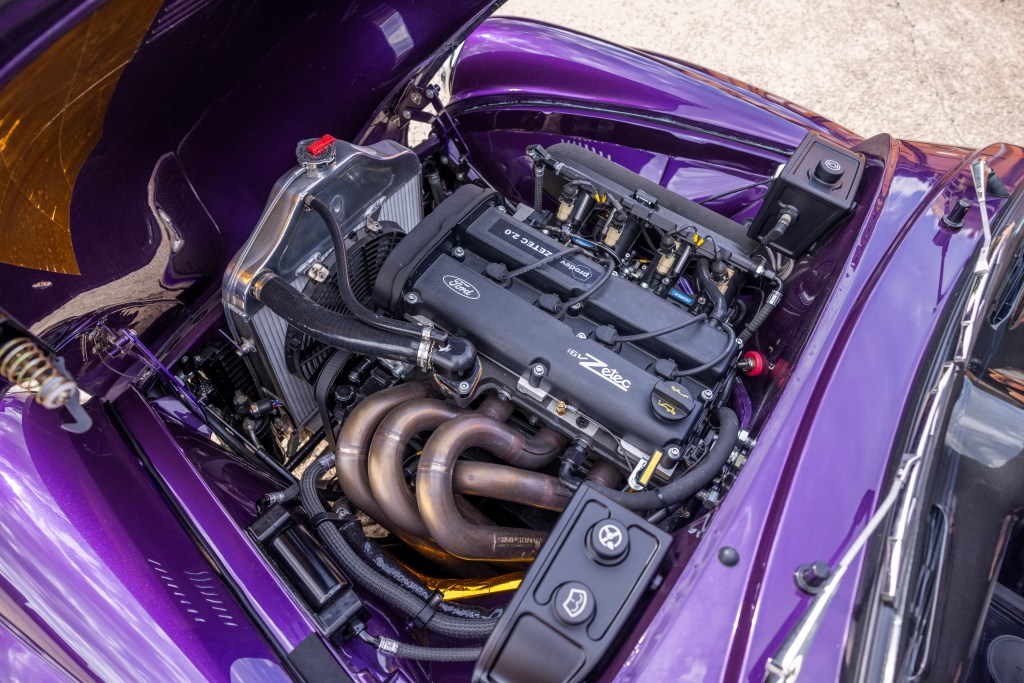
For all the Mazda hardware underneath, the engine choice came from Ford. Retro Power opted for a 2.0-litre Zetec, and it makes a lot of sense in context. The Zetec is compact, reliable, well understood and capable of making the sort of power this car actually needs without turning the whole build into an overcomplicated packaging nightmare.
A Duratec could have done the job too, but the Zetec’s size and simplicity made it the better fit here. Sometimes the best engine for a restomod isn’t the newest or the most glamorous — it’s the one that gets the balance right.
OMEX throttle bodies, ECU and ProDev-built engine
The engine itself was built by ProDev and runs OMEX throttle bodies with an OMEX ECU, giving the Minor a crisp, responsive naturally aspirated setup that suits the rest of the package beautifully. Output is around 200bhp, which in a car this size and weight is absolutely ample.
That’s the thing with a build like this. It doesn’t need headline-chasing horsepower. It needs enough performance to feel genuinely fast, while still being tractable, reliable and enjoyable. Two hundred horsepower in a one-ton classic-looking shell with modern chassis hardware is more than enough to deliver that.
Simpson Race Exhausts and clever packaging
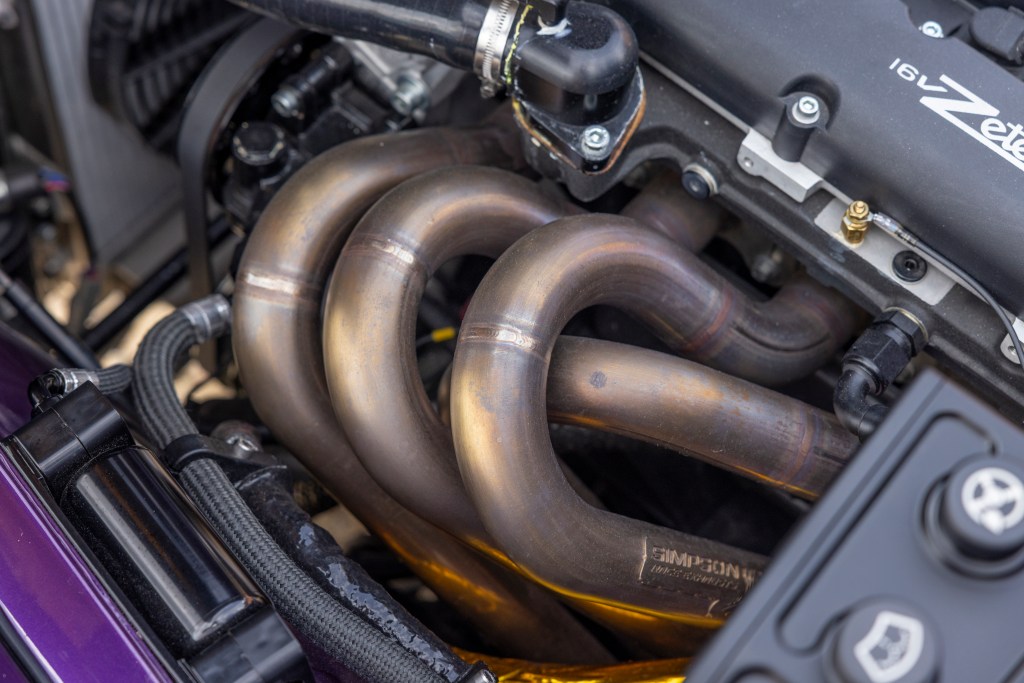
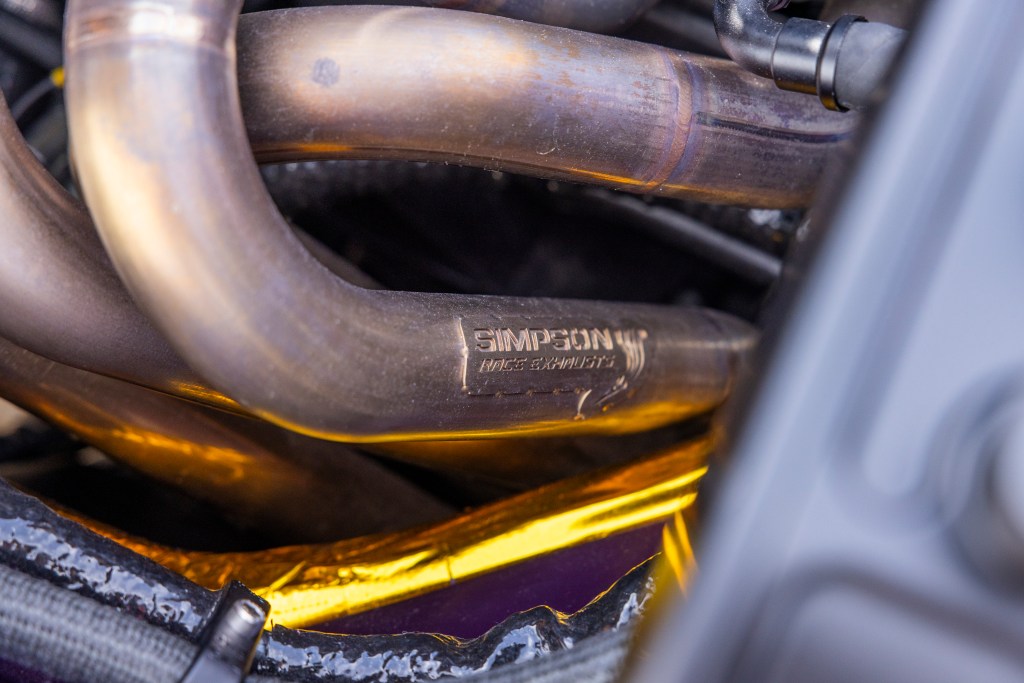
The exhaust manifold and system were built by Simpson Race Exhausts, and by all accounts that was the right call. Manifolds in cramped engine bays are always a pain, and this one had the added challenge of tight packaging inside a small-bodied car that still needed to look neat.
The rest of the system uses a long round silencer under the car and a transverse rear box with twin exits, which helps keep the car civilised enough for road use while still sounding suitably special.
That packaging theme runs through the entire build. Nothing is there by accident, and almost everything seems to have been placed only after someone sat down and figured out the smartest possible way to make it work.
A modern custom interior hidden inside a classic shell
MX-5 seats and a much better driving position
The inside is where this build really shows its hand. Rather than preserving the original Minor’s upright driving position and token practicality, Retro Power leaned into what the car actually needed to be good. There are no rear seats, which allowed the driving position to be moved much further back and lower down, making the cabin feel far more natural and comfortable.
The seats are MX-5 items, chosen largely because they fit. That sounds obvious, but in tiny classics like this, finding modern seats that physically work without swallowing the whole interior is much harder than people think.
Air conditioning, Bluetooth and a digital rear-view mirror
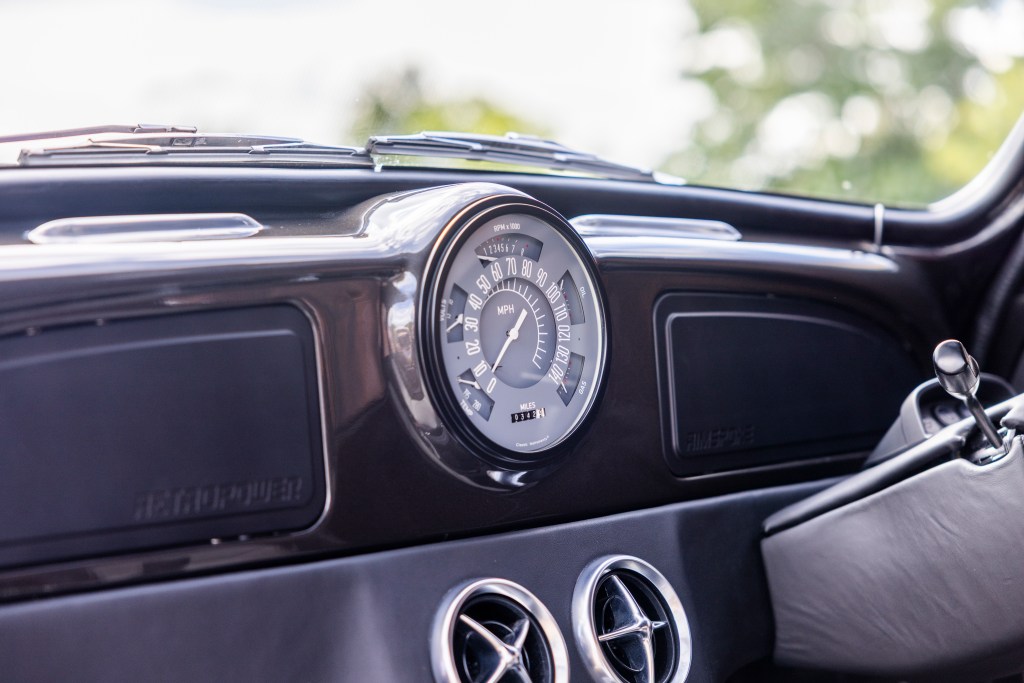
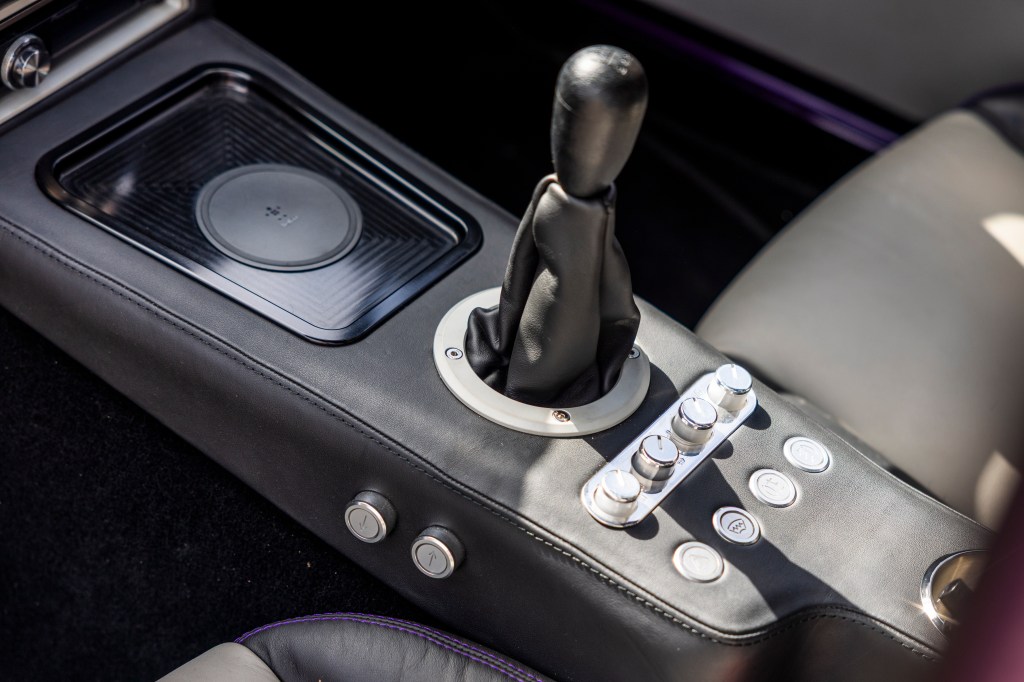
This is also where the “modern usability” part of the brief really comes alive. The car runs proper electronic air conditioning, Bluetooth audio, cup holders, a cordless phone charger and a digital rear-view mirror with a camera feed from the back of the car.
That last feature is particularly neat, because it means your rear view is no longer compromised by the cabin itself. Then when you select reverse, another camera view appears to give you a close look behind the car. It’s modern tech used properly — not thrown in for the sake of saying it’s there, but added because it genuinely improves the ownership experience.
Handmade steel dash and hidden electronics
The upper dash section retains the spirit of the Morris original, but much of the rest is hand-fabricated in steel to house all the systems the car now needs. Behind the blanking panels sit the HVAC hardware, the engine management and twin ECU Master PDMs handling the vehicle electronics.
That’s a lot of tech to hide in a dashboard designed in an era when “luxury” meant maybe having a heater. The craftsmanship involved in making it all disappear while still keeping the cabin visually simple is seriously impressive.
The details that make this Morris Minor restomod special
Image wheels with subtle bespoke touches
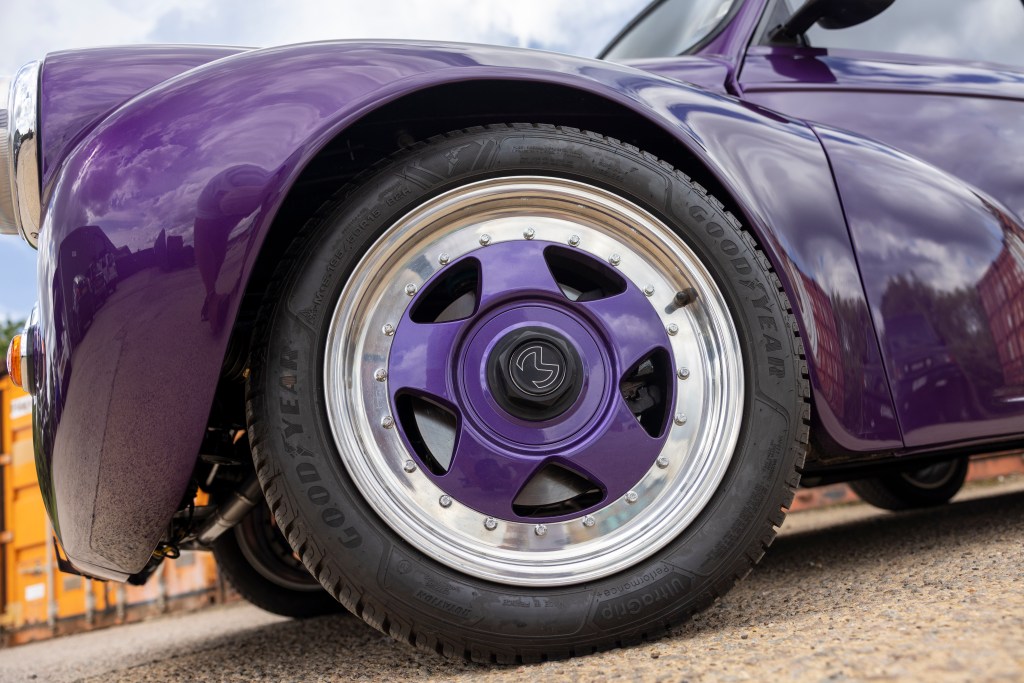
The wheels are Image items, chosen because they perfectly capture the hot-rod feel the owner wanted. They look period enough to suit the shape, but not so old-fashioned that the rest of the build feels stuck in the past.
Retro Power also added a few custom details, including a laser-etched Morris “M” on the centre caps and a small security tweak to make sure the threaded cap arrangement stays put.
Forward-opening bonnet and billet reservoirs
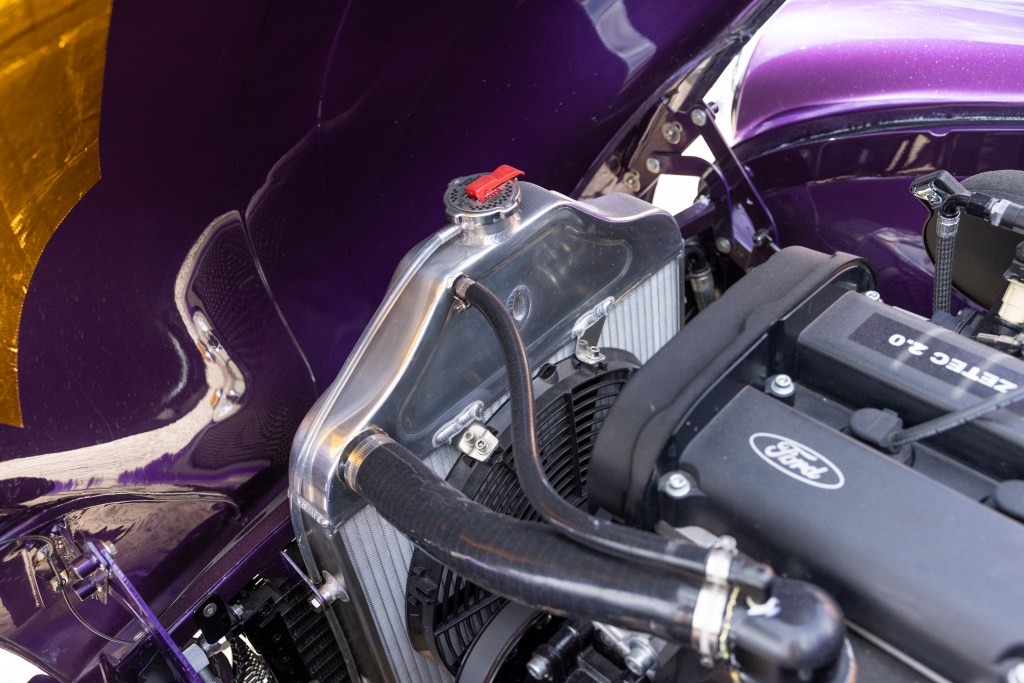
Open the bonnet and you’ll spot one of the build’s coolest details: a forward-hinging bonnet. The original Minor setup was never going to work with everything that now lives behind the bulkhead, so Retro Power designed its own hinge system and used E30 bonnet struts to support it.
It looks cooler, works better and adds just the right amount of theatre.
There are also some beautifully machined billet reservoirs under the bonnet, plus a radiator that ended up with its distinctive shape simply because function demanded it. The radiator had to be the highest point in the cooling system, which led to it being shaped to follow the bonnet line. It looks artistic, but it’s really just clever engineering wearing a nice suit.
Form following function, everywhere
That might be the best way to describe the whole car, actually. Everywhere you look, something appears stylish because it had to be designed well to work at all. That’s always a good sign. The best builds don’t separate aesthetics and engineering — they let one feed the other.
How long a Retro Power build like this really takes
Around two years from start to finish
For a car of this complexity, Retro Power says the build took around two years, which sounds almost suspiciously quick until you remember they do this sort of madness all the time. Even then, a project at this level is still a serious undertaking, involving body design, chassis fabrication, drivetrain integration, interior work, paint and all the tiny little systems nobody notices until they don’t work.
Why every customer vision ends up different
One of the nicest things about Retro Power’s approach is that they don’t seem interested in building the same vision over and over again. The point is to take a customer’s idea of a dream car and turn it into reality, whether that ends up being a Morris Minor on MX-5 running gear, an Allegro with Integra underpinnings or something even more left-field.
That’s what gives their cars character. They don’t feel like templated builds. They feel like carefully answered questions.
And if we’re honest, that’s exactly why this thing is brilliant.
It uses a 2.0-litre Ford Zetec engine running OMX throttle bodies and an OMX ECU.
Yes, much of the running gear is MX-5-based, including the front and rear subframes, suspension layout and gearbox.
Retro Power says the build produces around 200bhp.
The car has been widened by nearly 100mm per arch, giving it around 200mm more track width overall.
Some of the original silhouette remains, but major sections of the body have been reworked, and the rear wings are entirely handmade in steel.
It includes air conditioning, Bluetooth audio, a cordless phone charger, cup holders and a digital rear-view mirror with reversing camera.
The build uses Image wheels with custom touches including a Morris-branded centre detail.
Retro Power says the project took around two years from start to finish.