
Twenty years is a very long time to own one modified car. In the UK scene especially, where projects are constantly bought, sold, stripped, rebuilt and replaced by the next big idea, keeping hold of the same Honda Civic for two decades feels almost rebellious.
For Shaun, though, selling this EK has never really been part of the plan. He bought it as his first car after passing his test, promised his dad he wasn’t going to modify it and managed to honour that promise for approximately one week.
After that, things escalated.
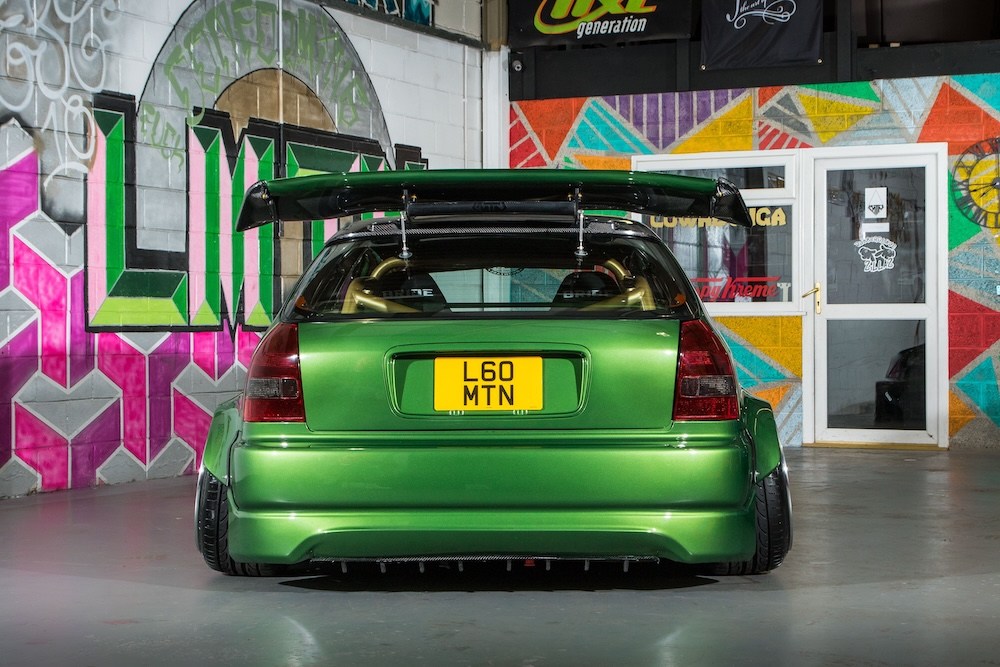
The Civic has since lived through several distinct versions, appeared on the cover of Fast Car three times and changed with the modifying scene around it. Yet instead of eventually being restored back to standard or reinvented as a restrained OEM-plus build, Shaun has doubled down on everything that originally made modified cars fun: fabrication, experimentation, colour, big audio, strange ideas and the willingness to cut something up simply because you reckon you can make it better.
The result is a modified Honda Civic EK that feels almost like a rolling archive of Fast Car culture.
From first car to Fast Car cover star
The story starts with a dark navy-blue Civic that Shaun bought as his first car. His dad laid down the usual new-driver rule: don’t modify it.
Anyone who spent their youth reading tuning magazines will already know how that went.
Shaun was at college at the time and even fitted coilovers there so his dad wouldn’t immediately know what he’d been up to. It’s exactly the kind of low-level deception that defined thousands of first project cars: lower it somewhere away from home, hope nobody notices and then act surprised when the front bumper starts scraping over the driveway.
From there, the EK began changing rapidly. Navy blue gave way to a pearl white and blue combination, which was followed by a much cleaner snow-white finish. That version earned the car its first Fast Car feature. Purple came afterwards, and Shaun has deliberately kept the original purple door handles as a physical reminder of that stage in the car’s history.
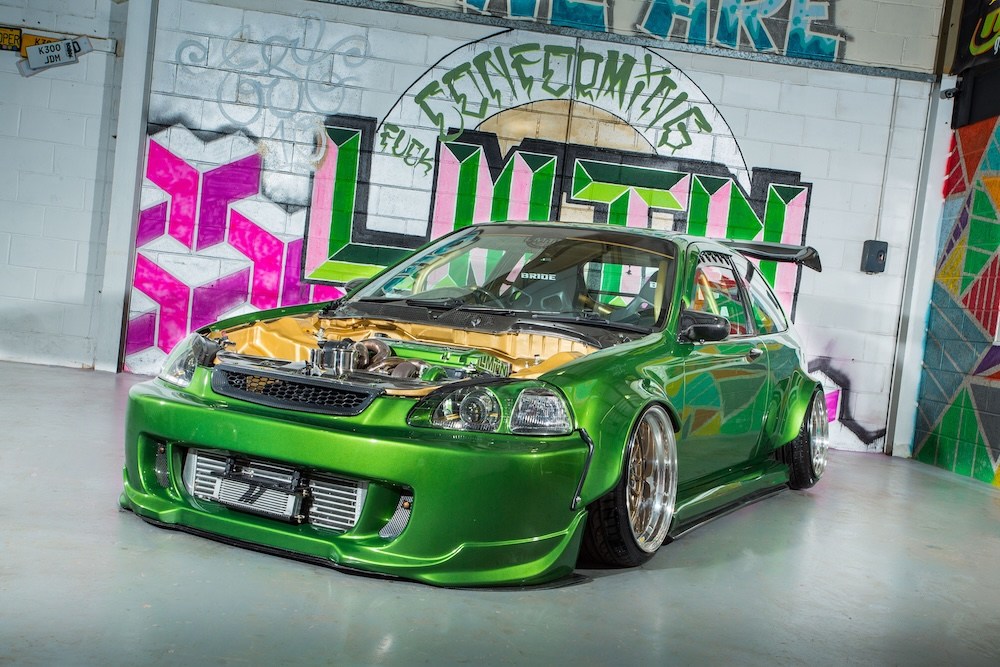
For its tenth anniversary under his ownership, the Civic went green. Ten years later again, it still hasn’t stopped evolving. That continuous development is important because this isn’t a car that was built once and then preserved. Every version reflects where Shaun was at the time, what he had learned and what he wanted to try next.
Building an old-school modified Honda Civic
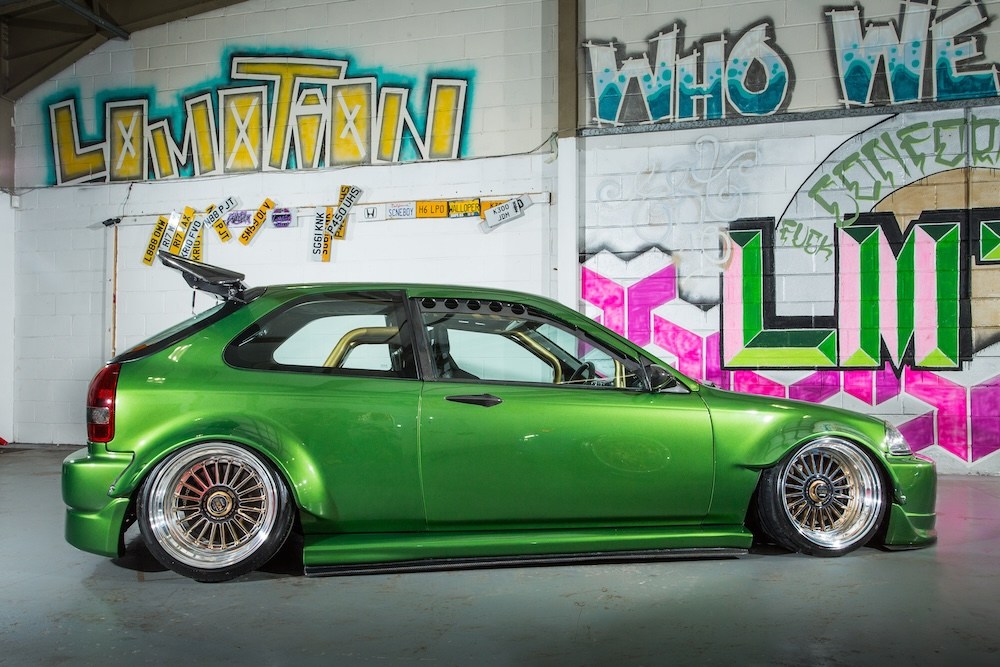
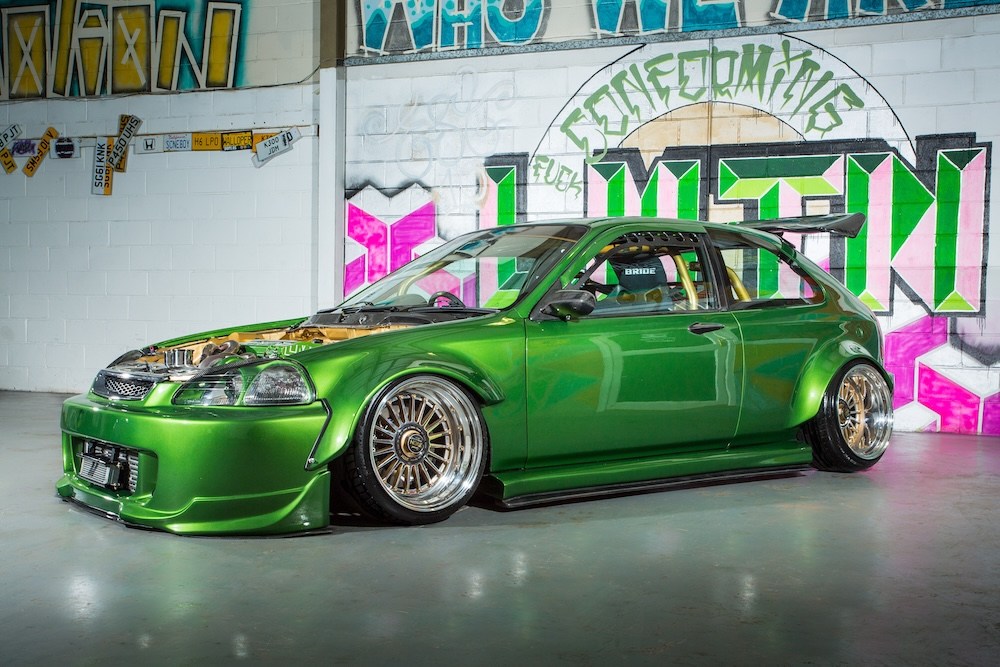
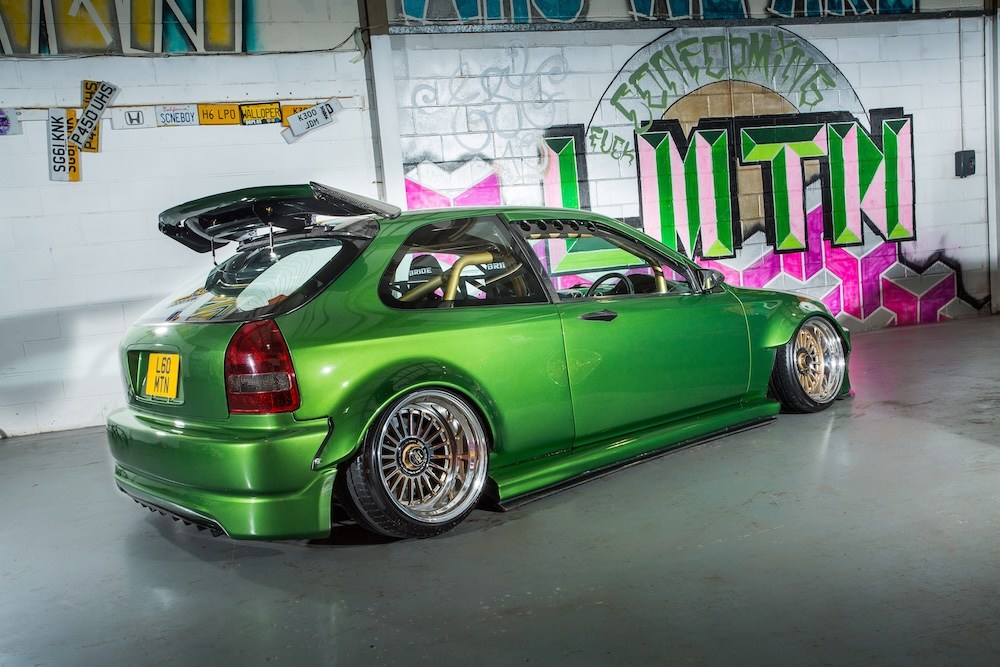
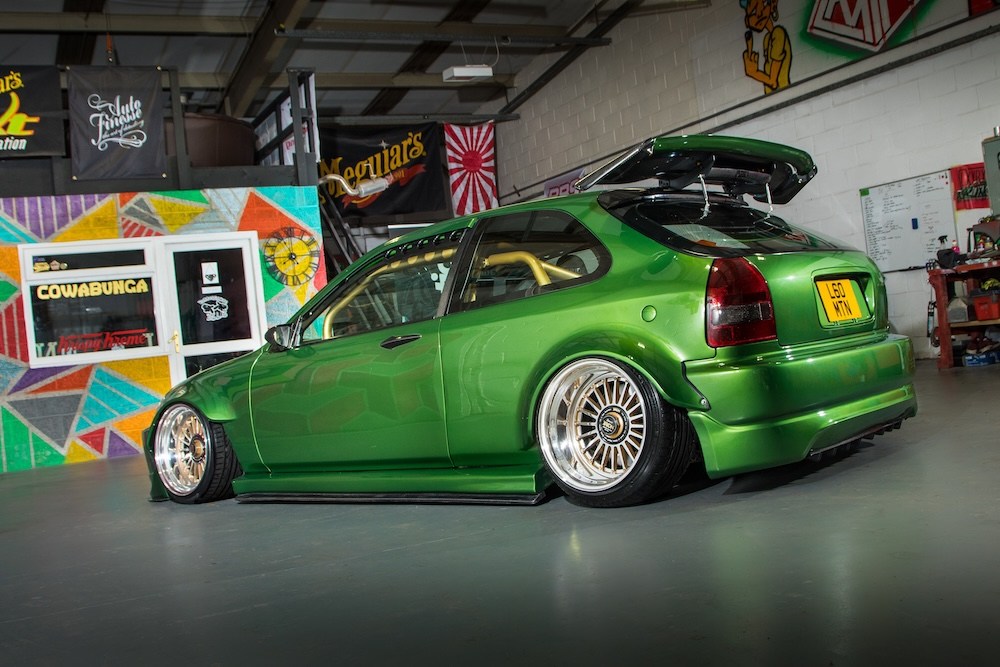
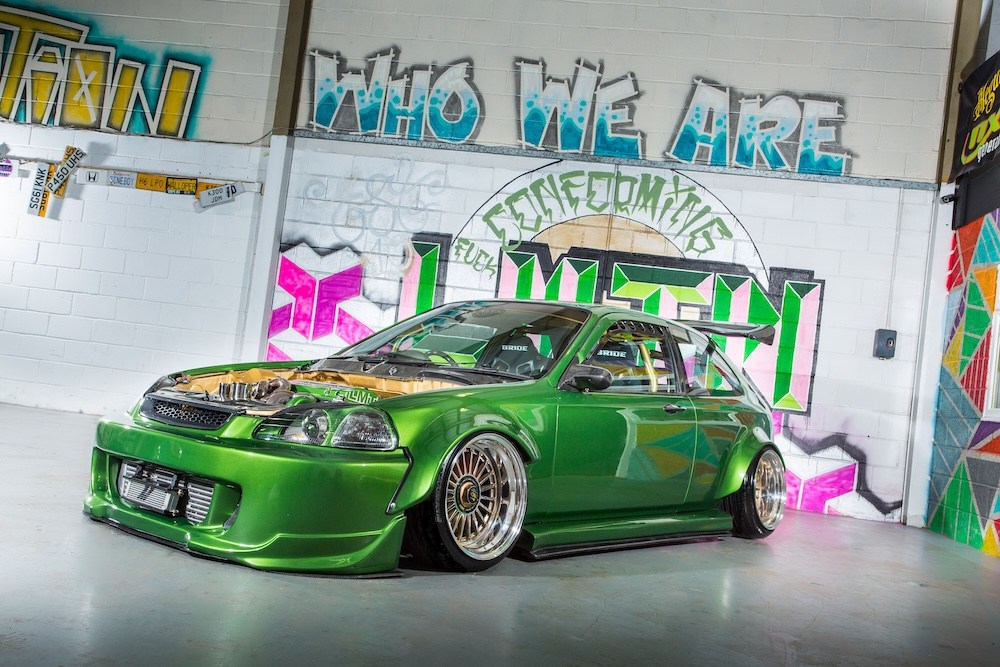
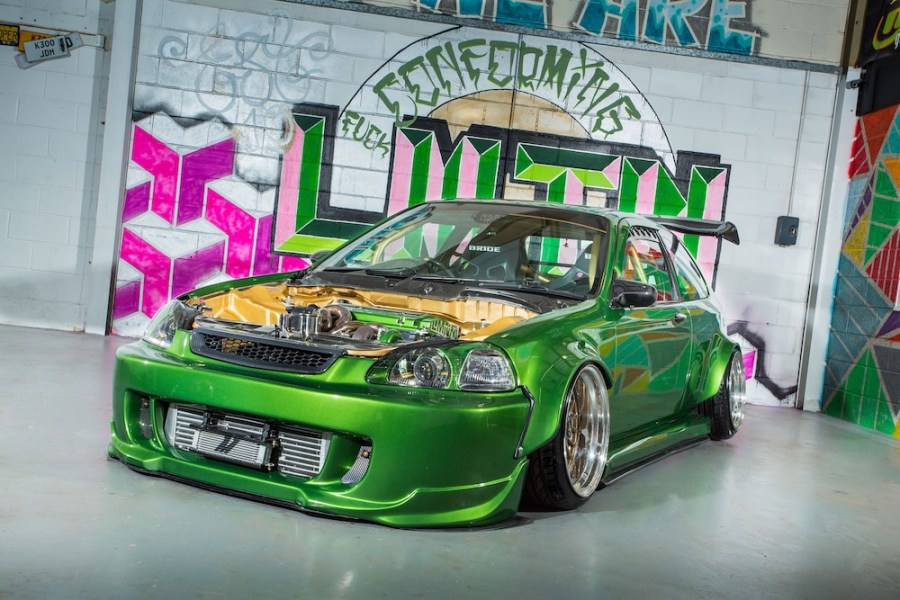
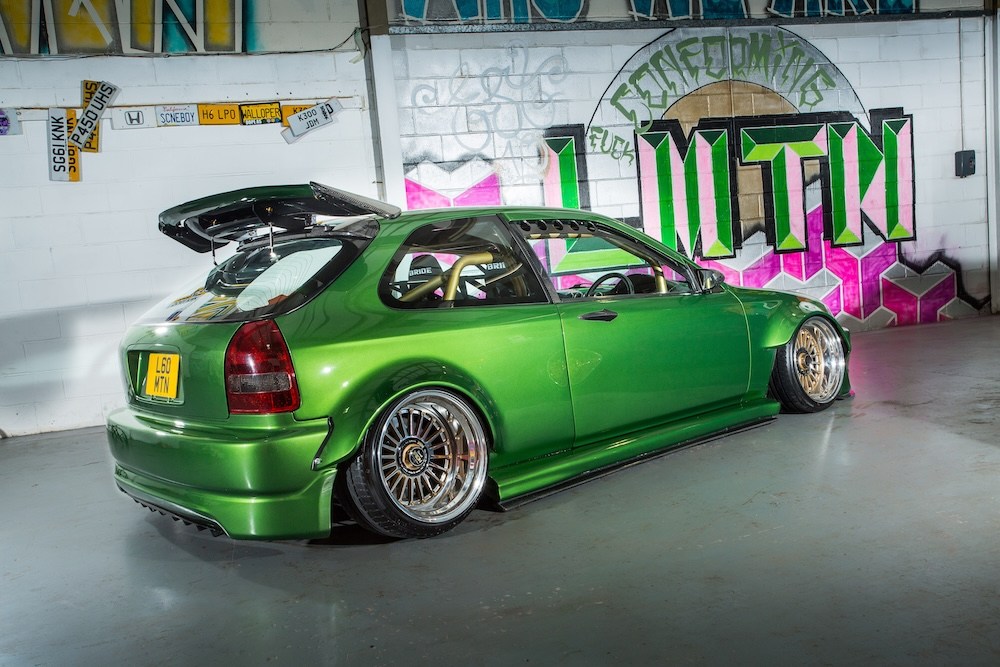
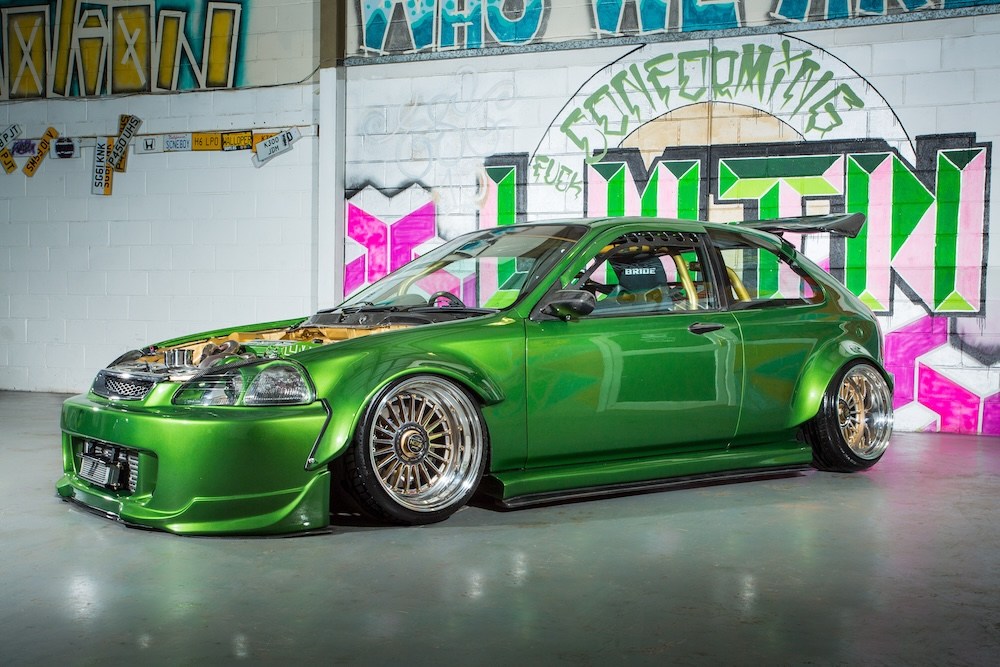
Look at the Civic now and it immediately takes you back to an era when modifying usually meant changing far more than the wheel design and ride height. The body has been extensively reshaped, but not through one complete off-the-shelf widebody kit. Shaun took generic arch flares, chose the wheel specification he wanted, then built the body around them.
That approach sounds backwards until you remember how many memorable show cars have been created exactly that way.
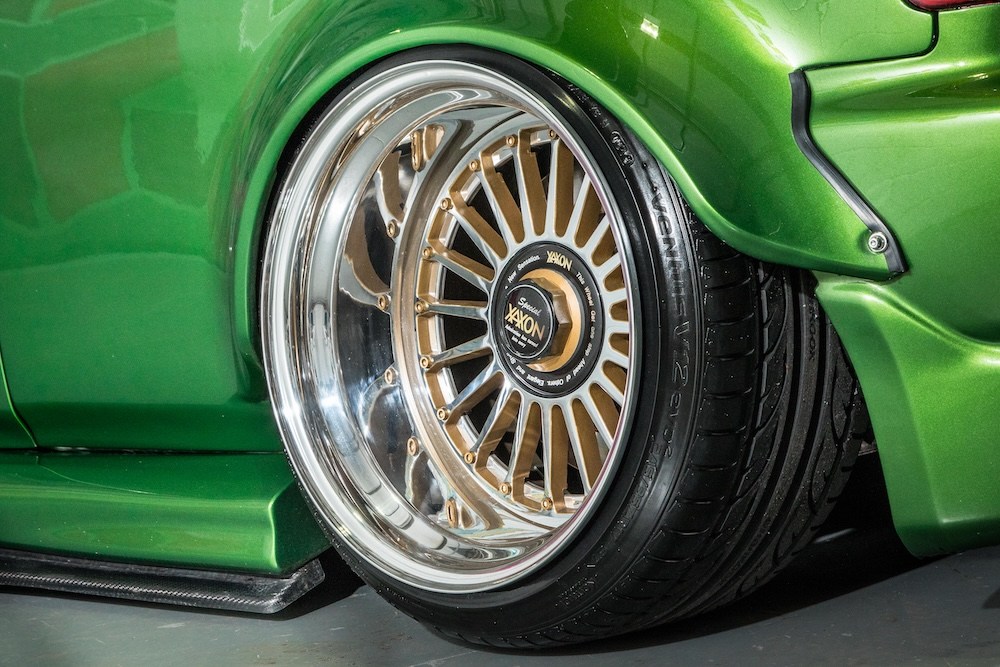
The wheels came first. Shaun sourced a set of SSR split rims whose original centres date from the same year he was born. They began life as smaller wheels before being rebuilt and upsized to 17 inches with much wider lips and barrels.
Once the wheels were where Shaun wanted them, the rest of the Civic had to catch up. The arches were blended into the shell, creating a smooth widebody shape instead of leaving the flares visibly bolted on. It gives the EK that unmistakable old-school show-car flavour, but the cleverness lies in how much of the rest of the body is completely custom.
S2000 parts, FN2 handles and serious fabrication
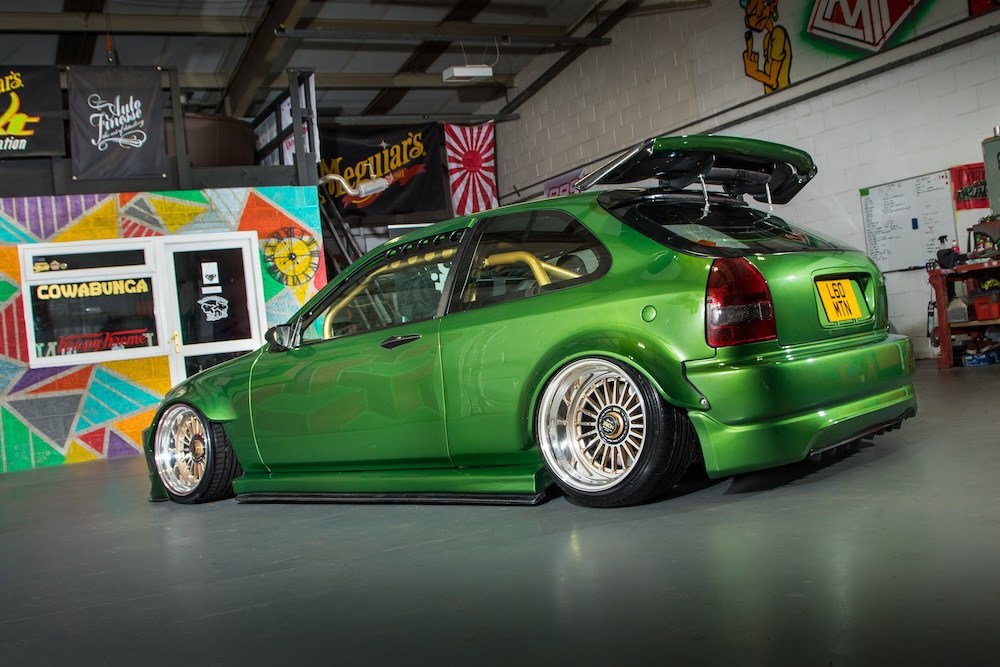
The side skirts are a perfect example. Rather than ordering one aftermarket component, Shaun combined original EK Civic skirts with sections from a Vauxhall Vectra C, extending and reshaping everything until the proportions worked with the wider body. Plastic welding, fibreglass and conventional bodywork techniques did the rest.
The front bumper takes that philosophy even further. Its central section began as part of a Honda S2000 bumper, then several bumper sections were grafted together and reshaped around the EK front end. Even the lower lip has S2000 roots.
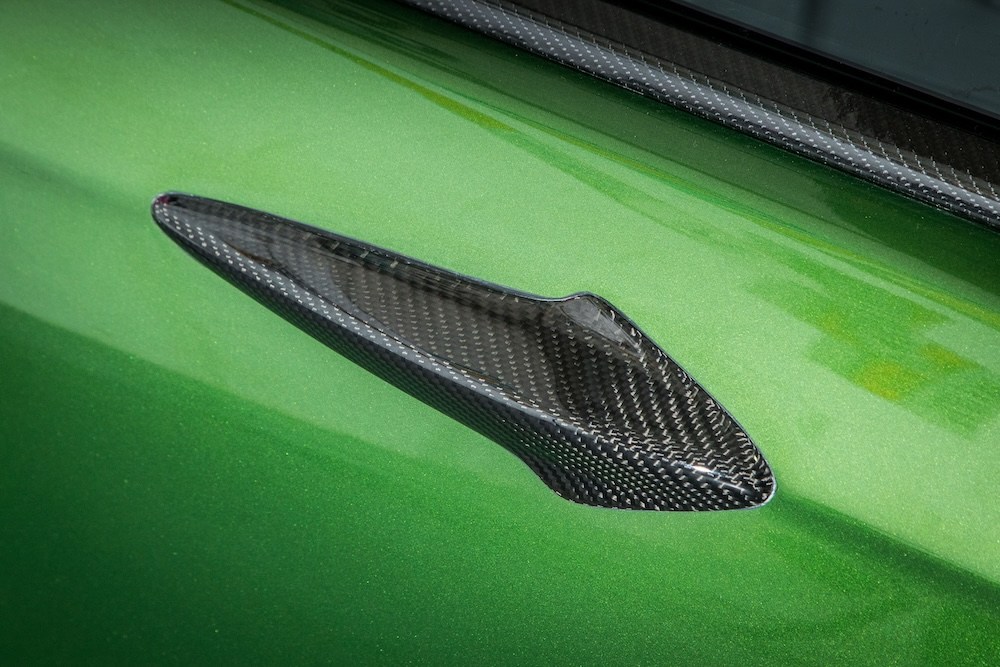
Elsewhere, an FN2 Civic Type R door-handle section was incorporated into the design, only without a conventional visible handle remaining. The fuel filler has been replaced with a flush-mounted motorcycle-style cap, while the headlights have been stripped and rebuilt with projectors, colour-coded detailing, carbon and pinstriping inside the housings.
None of those pieces needed to be there. That’s precisely why they’re interesting. Shaun openly admits that he hates doing bodywork. What he likes is the finished result, and this Civic effectively became the car on which he and his friends learned how to achieve it. The modifications weren’t simply ordered from a catalogue of specialists. Each difficult job became another skill to figure out. And the same thing happened mechanically.
H22 turbo power: from blown fuse to engine conversion
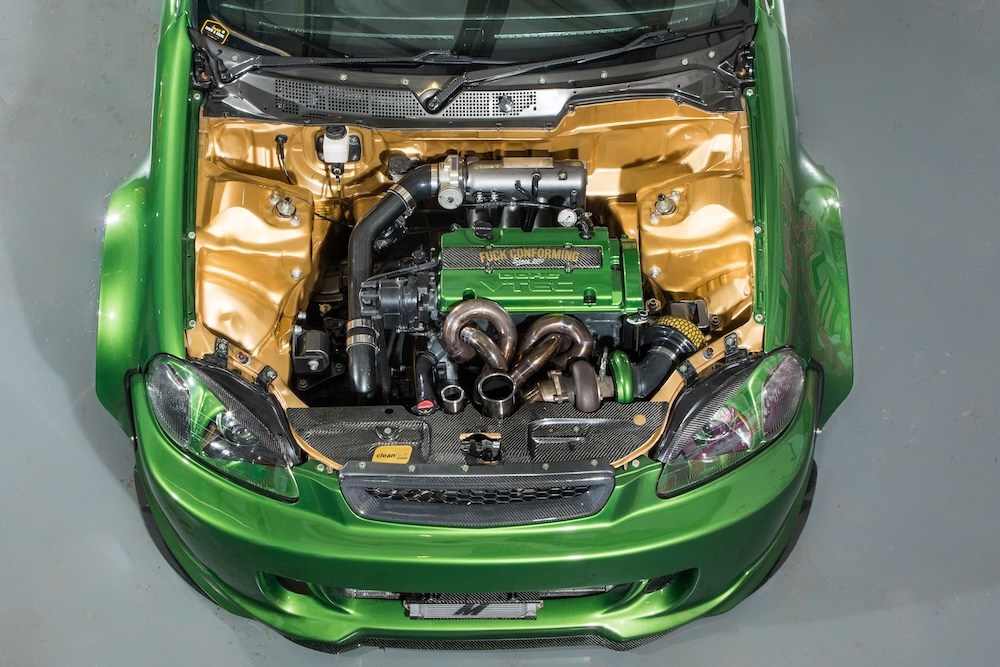
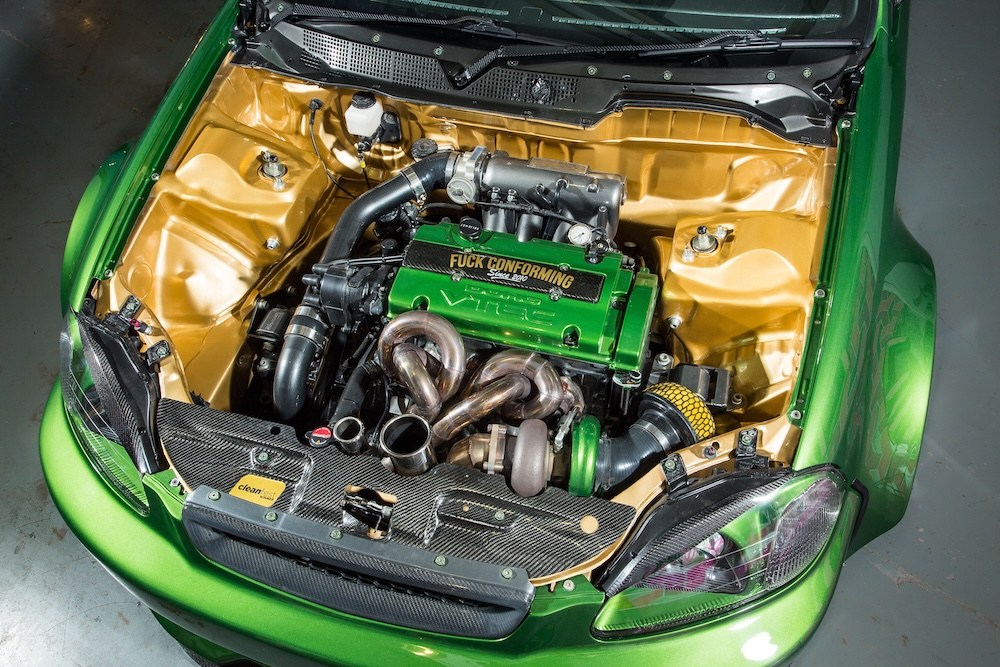
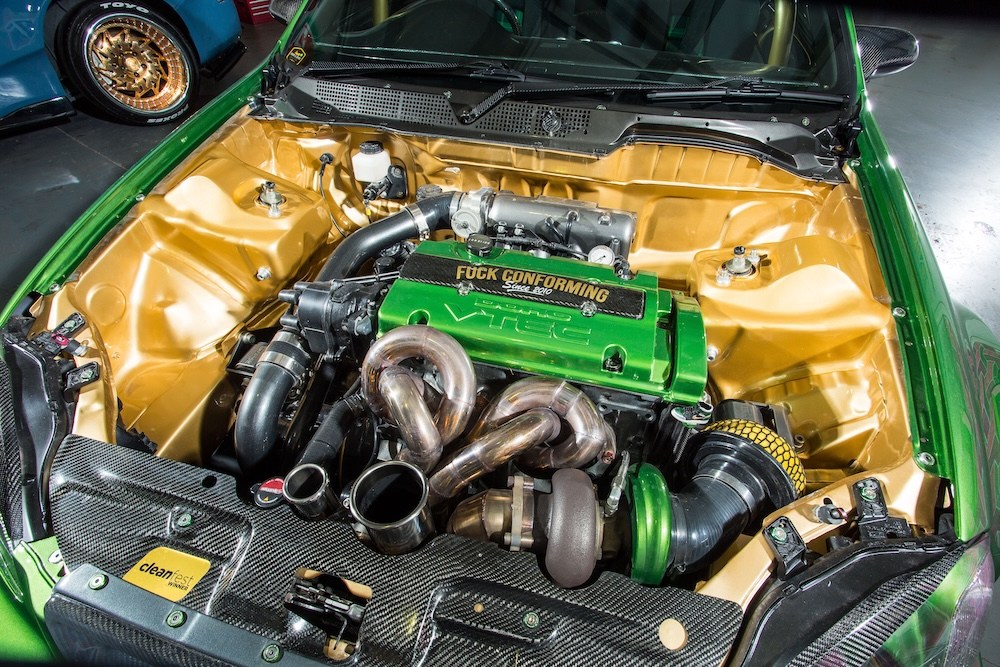
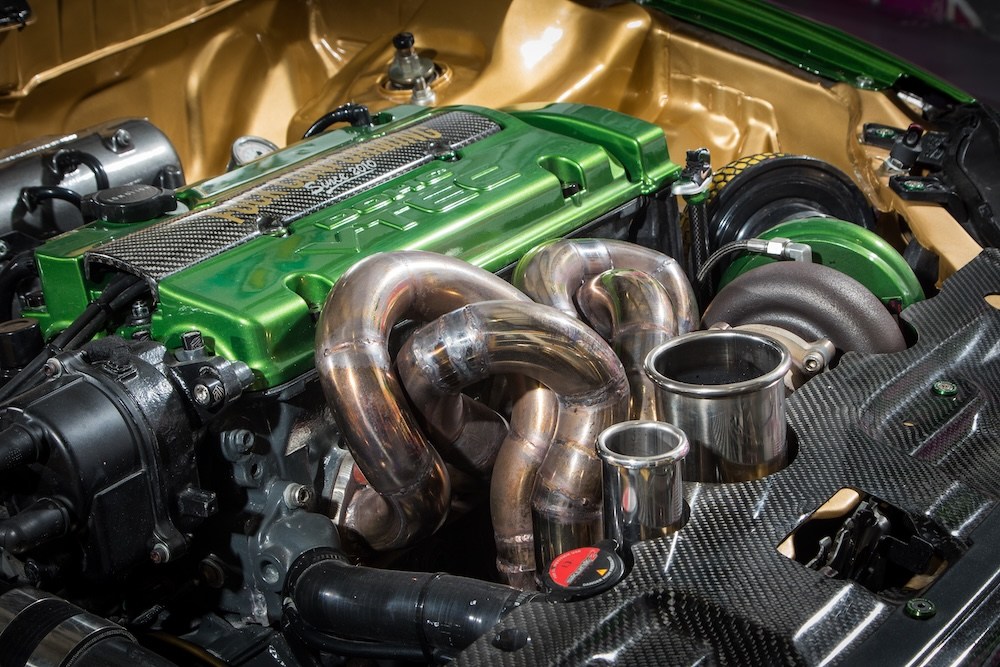
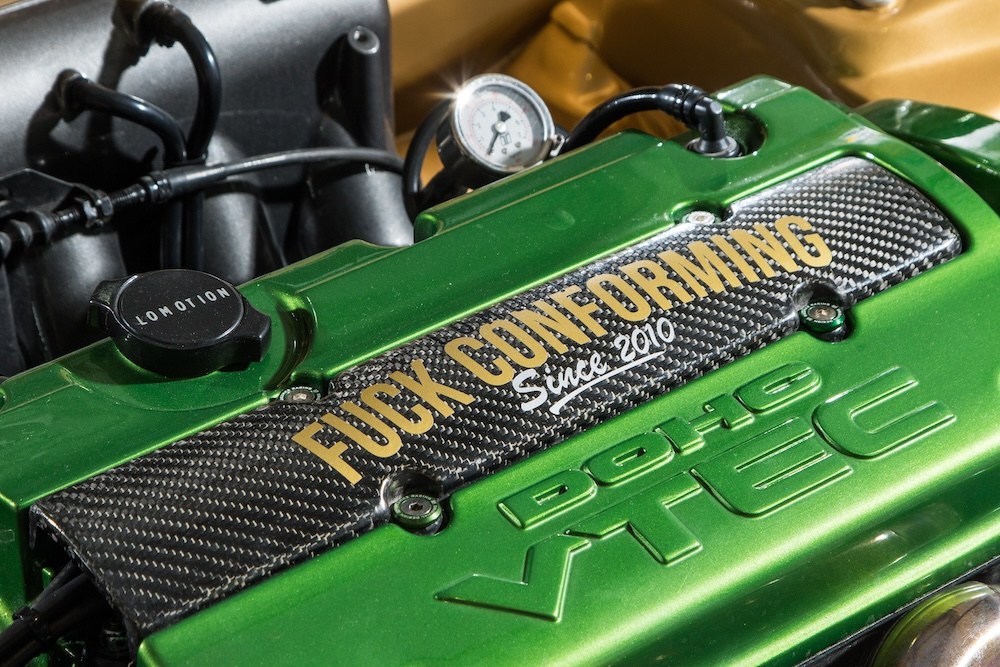
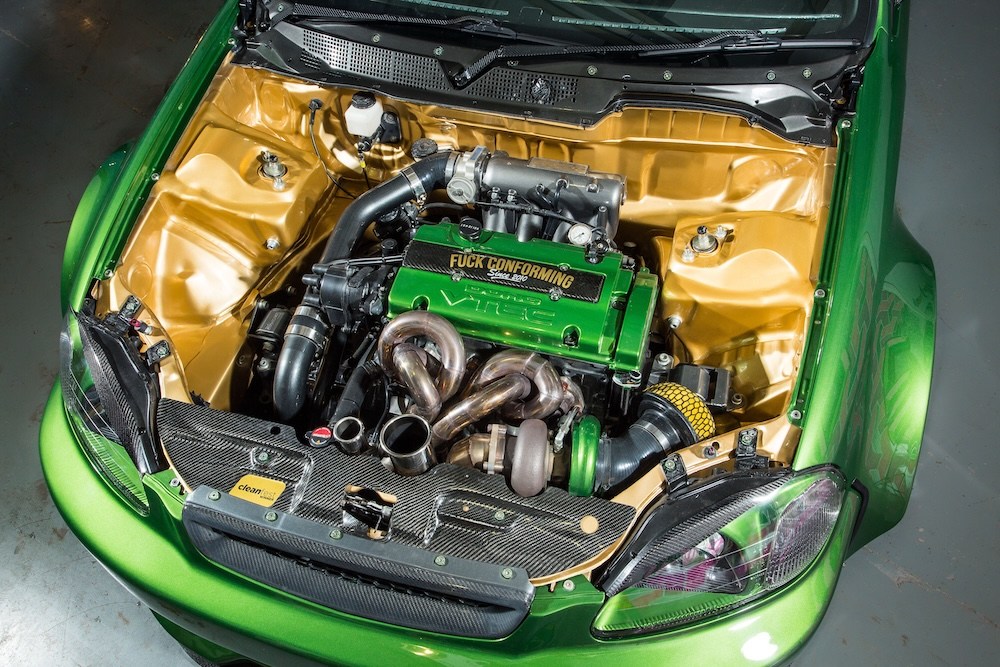
Today, the Civic runs a 2.2-litre VTEC engine sourced from a Honda Prelude, with the exact engine code to be confirmed from the build specification before publication. The reason Shaun swapped it in is brilliant.
When the Civic was still his daily driver, he was heading to a weekend job that existed largely to pay for his car insurance and phone bill. On the way into the car park, the Honda suddenly died. Shaun and his dad eventually towed it home with a rope, after which he began tearing the car apart looking for the problem. Nothing obvious presented itself, so the failure became the excuse for a complete engine conversion.
Only once the conversion was underway did they discover the actual culprit. A 40-amp fuse. Most people replace a fuse. Shaun replaced the engine. It’s difficult to imagine a more accurate summary of modified-car logic.
From naturally aspirated VTEC to 440bhp turbo power
The first incarnation of the 2.2-litre conversion remained naturally aspirated and relatively standard. Shaun ran it like that for around two years before gradually gathering the parts needed to take things further.
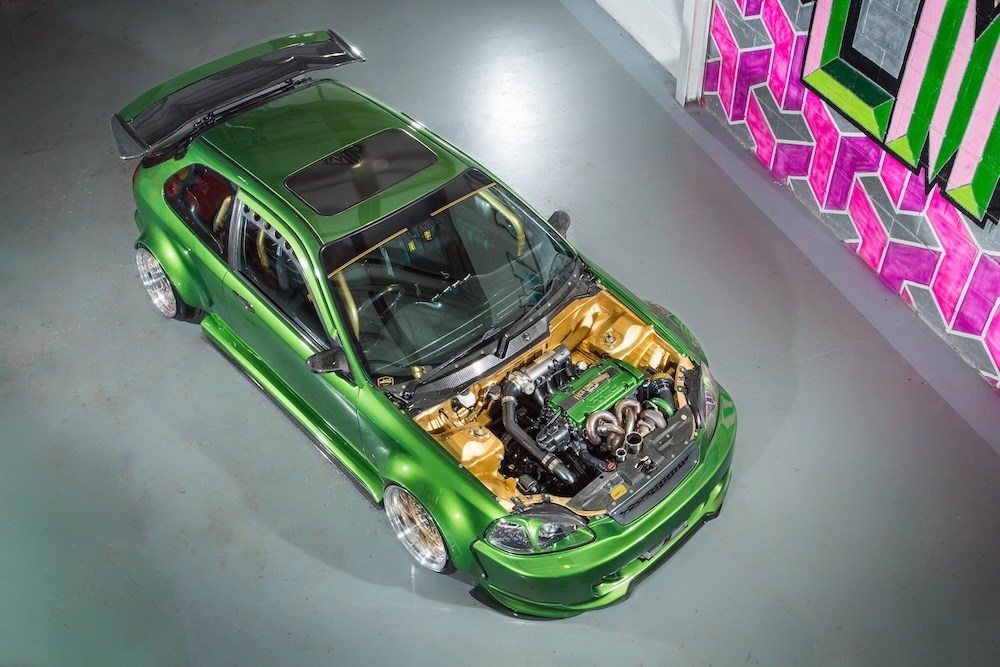
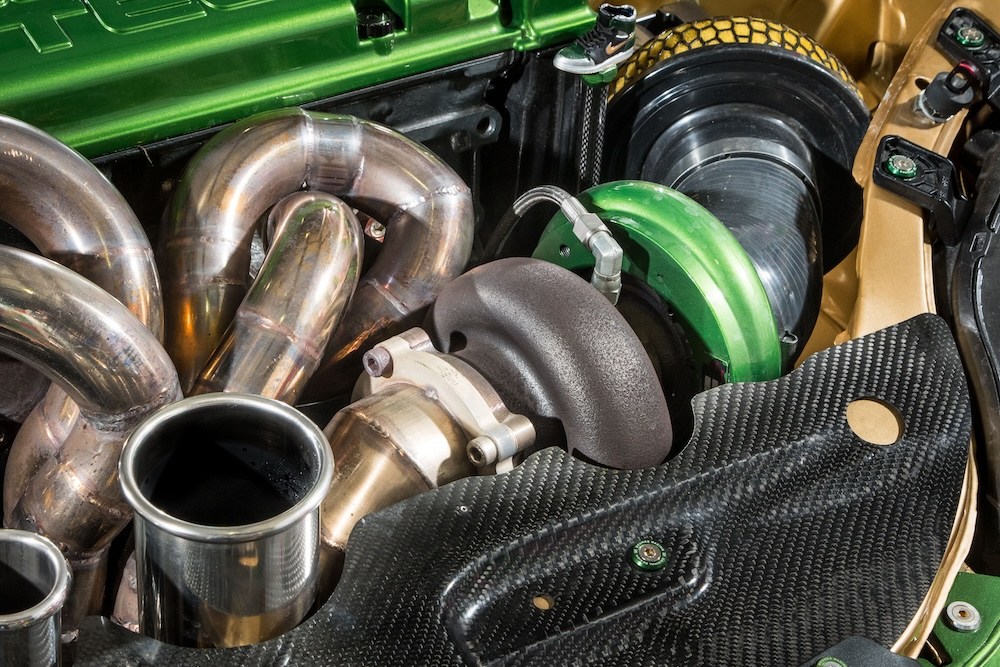
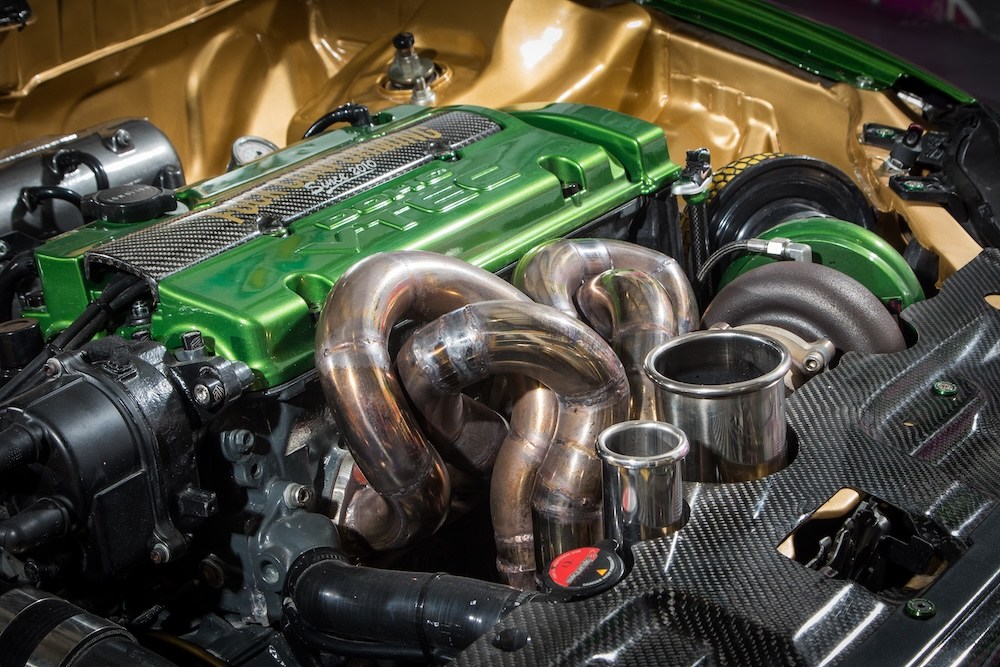
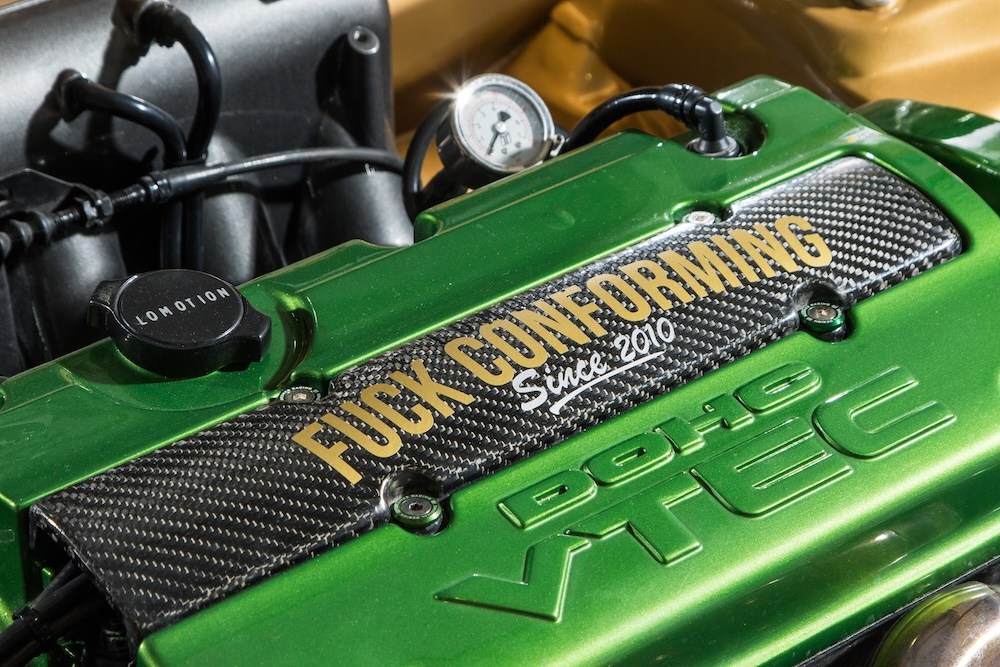
Predictably, the next stage involved boost. The engine is now described as fully forged, with upgraded internals, revised compression, uprated inlet hardware and a substantially larger turbo setup. Conversion mounts secure the engine in the EK shell, while the engine bay has been extensively tucked to remove clutter and keep everything looking as clean as possible.
Power is quoted at around 440bhp at the crank, with just under 400bhp reaching the wheels. In a lightweight, front-wheel-drive Civic EK, that is plenty. What makes the setup particularly fitting is that Shaun never jumped straight from standard car to finished turbo build. Like almost everything else on the Civic, the engine developed in stages as knowledge, money and ambition grew.
Learning fabrication instead of outsourcing it
The turbo installation also illustrates one of the biggest themes running through this entire car. Shaun wanted to learn TIG welding, so his friend Johnny, who works as a fabricator, helped him build a tubular manifold. The first version came before the turbo conversion; once Shaun had developed the skill, the boosted version became the next challenge.
It’s a wonderfully old-school way of approaching modified cars. Rather than taking the Civic to five different companies and receiving it back finished, the car became an excuse to learn something new. If the first version wasn’t right, they made another one. If Shaun didn’t know how to do the job, he found somebody who did and learned from them.
YouTube makes that process considerably easier today, but this Civic dates from a time when magazines and forums were still the main sources of knowledge. In many ways, the EK is a product of that community-led style of building.
Air suspension with custom BC-based hardware
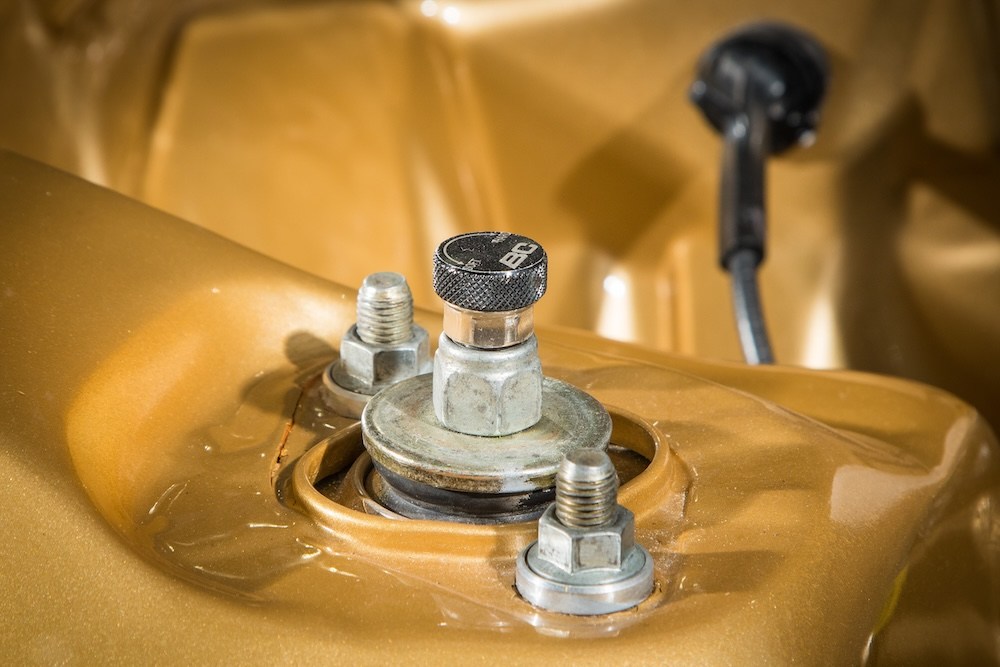
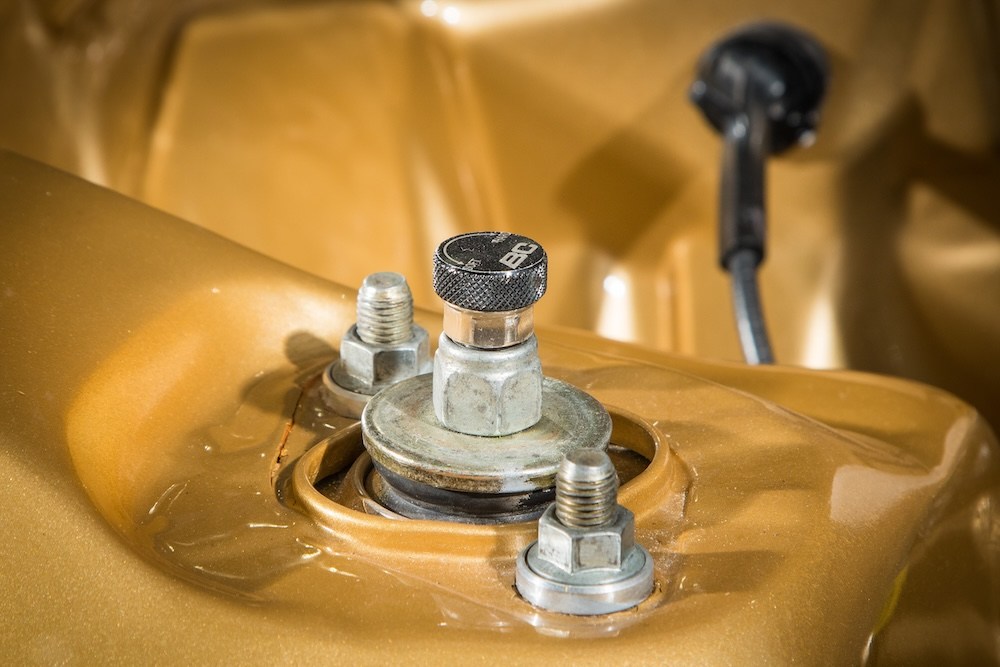
Visually, none of the widebody work would make sense if the car sat at standard height. The Civic runs an Air Lift-based management setup paired with custom suspension using BC shock hardware and air bags in place of conventional springs.
The result allows Shaun to put the Civic completely on the floor when parked, while still raising it enough to drive. Exactly as it should.
Inside Shaun’s completely reworked Civic
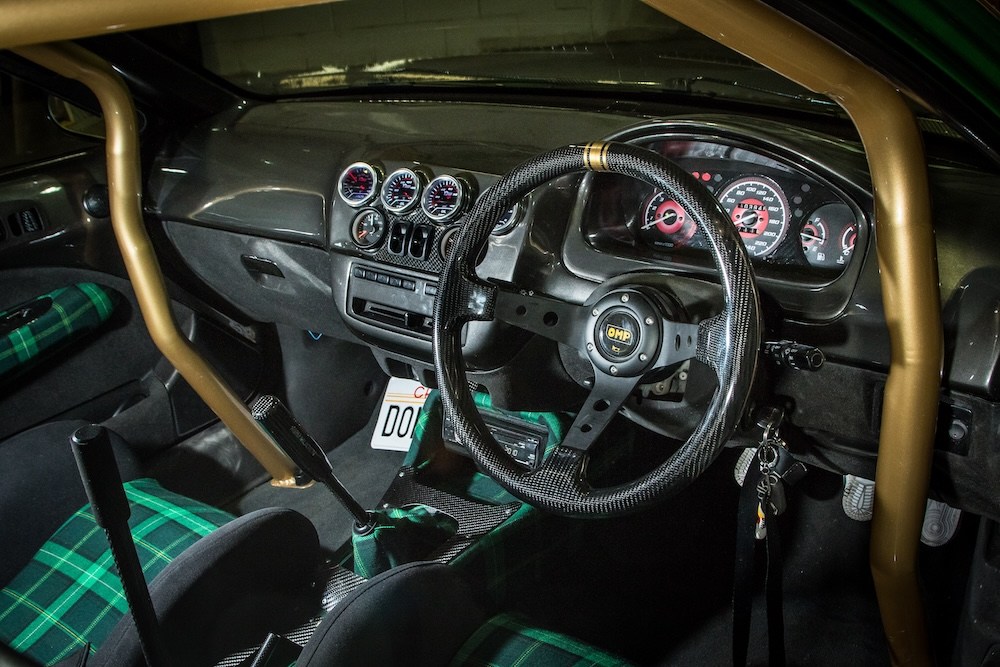
If you were expecting the interior to be calmer than the exterior, you haven’t been paying attention. The dashboard has been completely smoothed and painted, with most of the original vents and factory textures deleted. The airbags have gone too, leaving a much cleaner shape that ties visually into the bodywork outside.
That treatment continues through the doors and rear panels, creating a cabin that feels like one complete custom installation rather than a standard Civic interior filled with aftermarket parts. Shaun even reworked the handbrake because he liked the visual aggression of a long rally-style hydraulic setup. It remains a conventional mechanical handbrake underneath, but the release arrangement and carbon detailing give it the look he wanted.
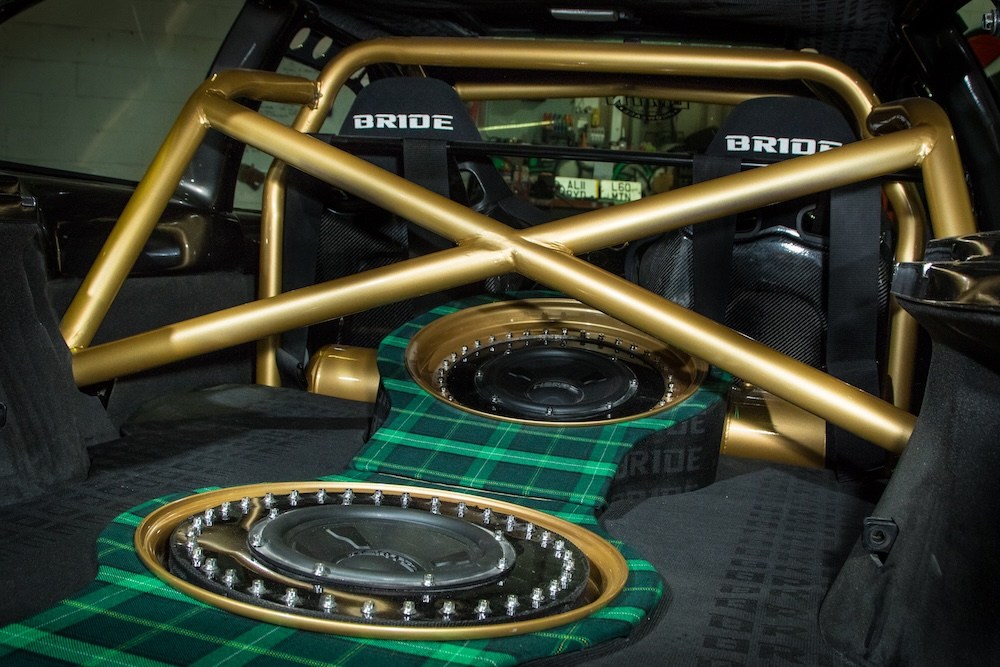
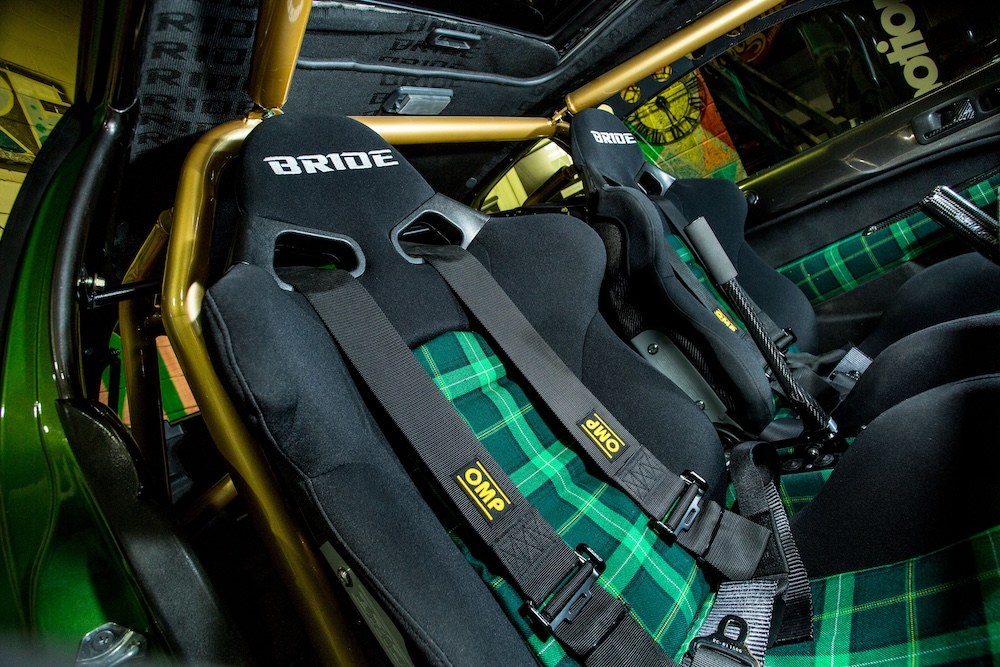
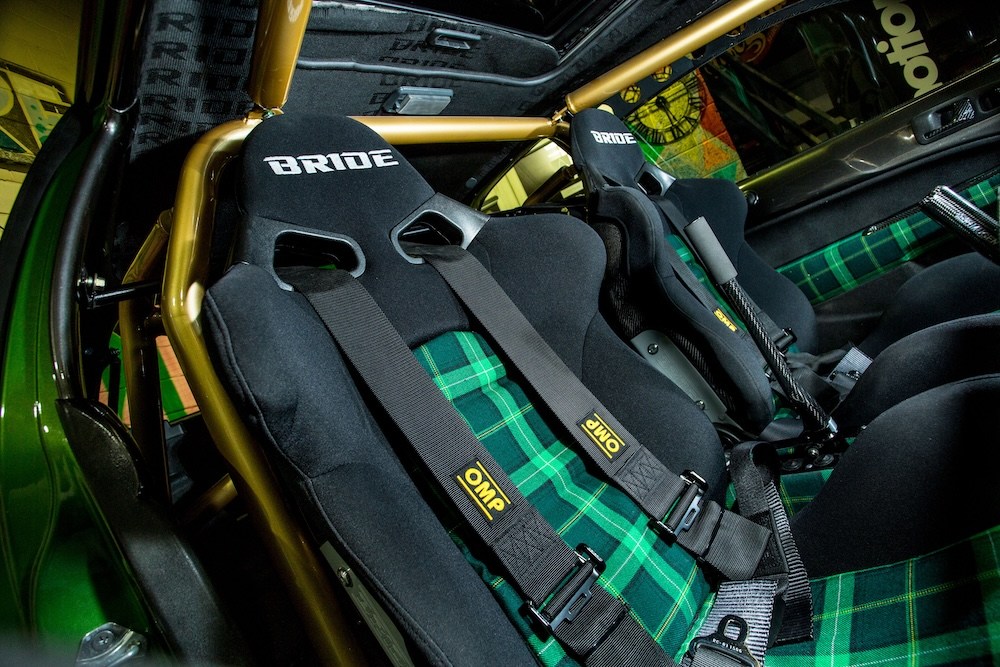
That detail sums the whole build up neatly. Function matters, but visual theatre matters too. The Bride seats are custom trimmed in Shaun’s signature tartan theme, while matching material appears throughout the interior. The lower dashboard areas are flocked, and a custom centre console contains illuminated switches controlling various lighting functions.
Additional gauges now occupy the area where the original stereo equipment once lived, allowing Shaun to keep an eye on the heavily modified engine.
A show cage built at home
Then there’s the cage. Shaun and his friends wanted to learn how to fabricate one, so naturally the Civic became the test bed.
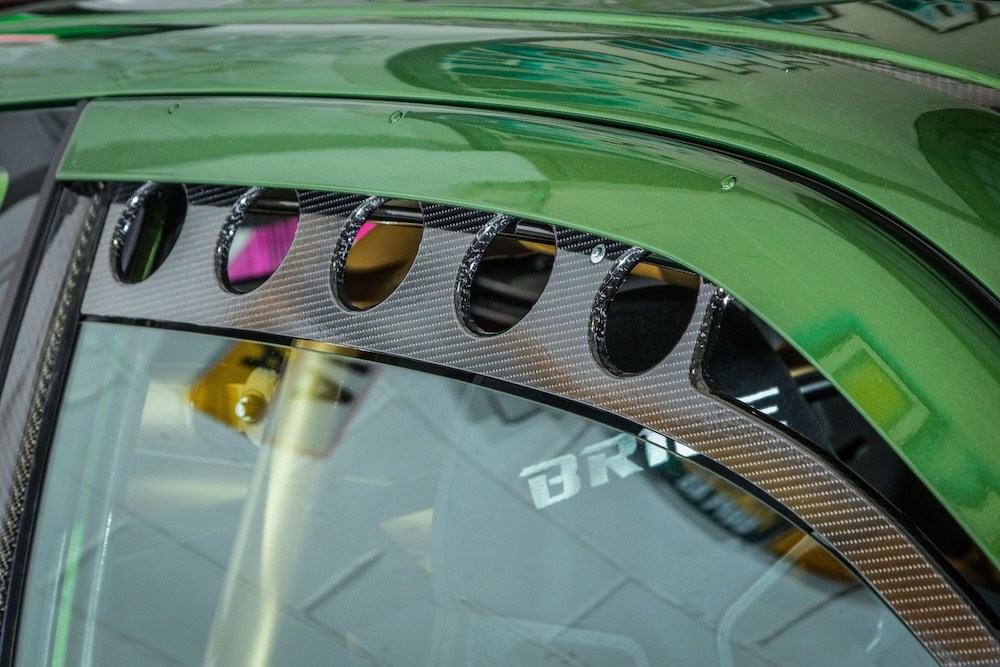
It is a removable six-point bolt-in design, although Shaun is refreshingly honest about its purpose. This is a show car rather than a homologated competition machine, and the cage primarily exists because it suits the aesthetic and gave them another fabrication challenge.
That story is far better than pretending it’s a race car. They wanted to know how to make one, so they did.
Old-school audio still matters
A car rooted this deeply in classic Fast Car culture would feel unfinished without a serious audio install. Thankfully, Shaun hasn’t forgotten where he came from. The boot is completely trimmed to continue the same tartan and Bride-inspired theme, while the air tanks become part of the display rather than simply being hidden away.
Then there are the two objects that initially look like spare wheels. They aren’t. Shaun had kept the lips and barrels from an earlier set of wheels because they formed part of the Civic’s history. Rather than leaving them sitting in the garage, he converted them into housings for a pair of eight-inch subwoofers. It’s unnecessary, complicated and brilliant.
The amplifiers sit beneath the false floor alongside the compressors and air-management hardware, keeping the visible installation clean while still retaining the huge stereo influence that was once central to serious UK show builds.
The hidden details that make Shaun’s Civic special
Spend five minutes looking around this EK and you’ll spot the obvious modifications. Spend an hour talking to Shaun and the really interesting stuff starts appearing.
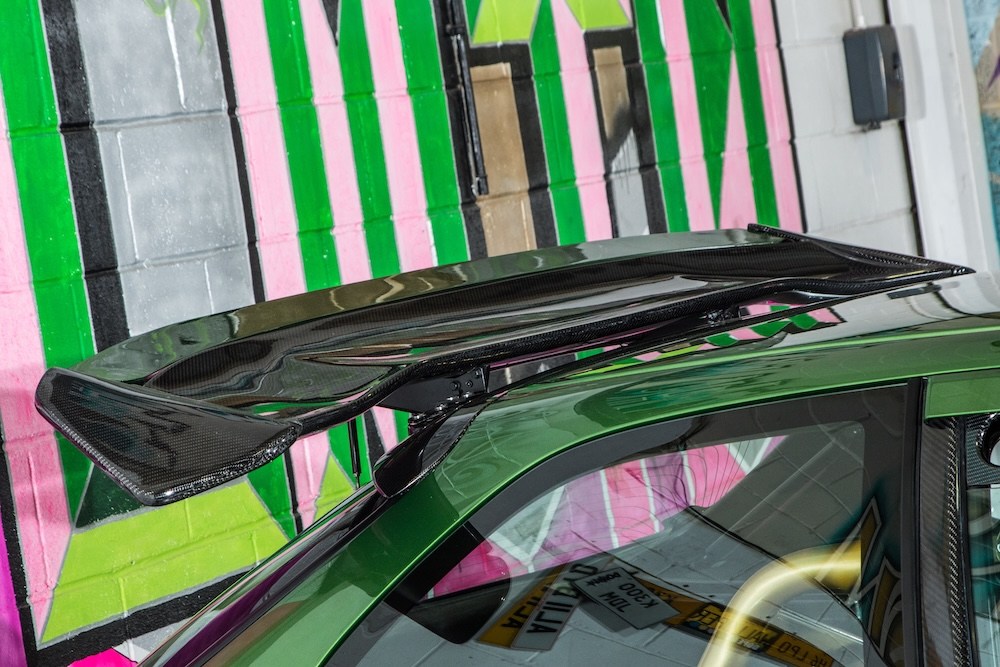
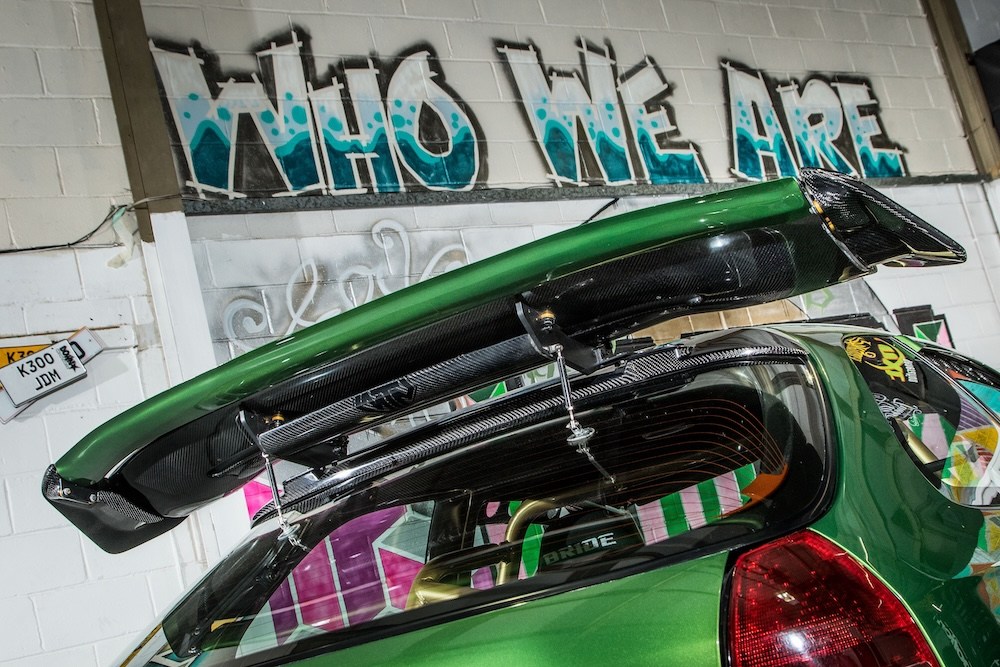
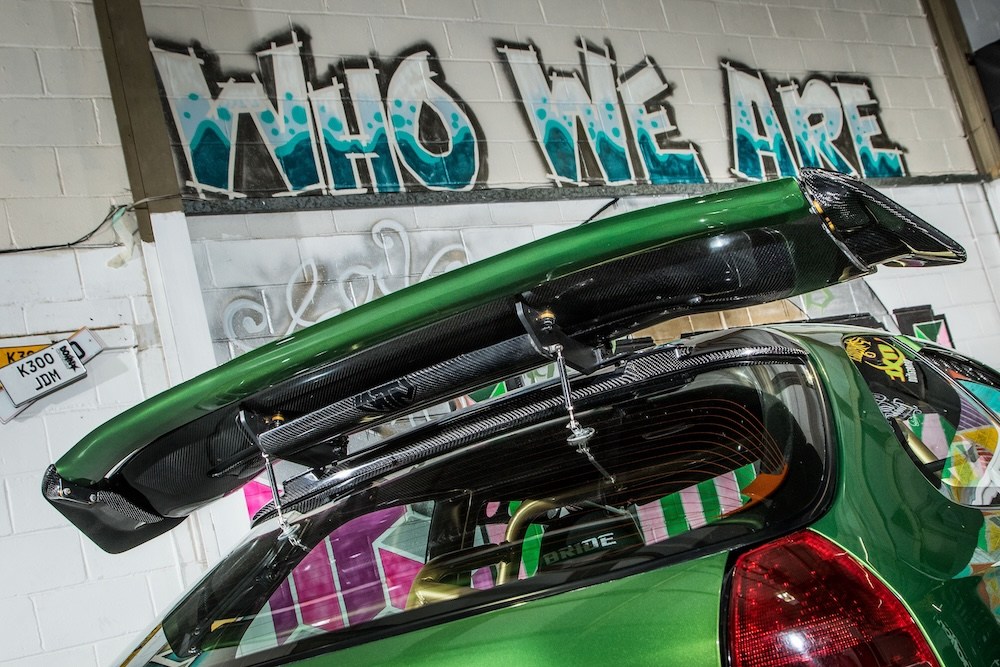
Take the rear wing. The main body is an oversized drift-style design, but the end plates originate from an EK9-style wing and were modified to work with it. Because the blade needed to be substantially larger, Shaun created another section to fit the proportions of the car. Part of that piece uses carbon material associated with a Boeing aircraft, bonded over a timber core with custom brackets making the wing adjustable.
It isn’t exactly Formula One engineering, but then that isn’t the point. It’s another example of Shaun using whatever materials and ideas were available to create something nobody else had. Even the leftover parts didn’t go to waste. Material from the original wing was turned into another inner winglet simply because it was there and could still be used.
Evo parts underneath a Civic bumper
The rear bumper hides another strange detail. It started life as a normal EK item, but the standard rubbing strips were removed and smoothed. Shaun then adapted an EP3 Civic Type R lip to the lower section.
Underneath sits the bit nobody would guess. The small diffuser started life as an Evo VIII vortex generator, normally found on the roof of a Mitsubishi. Shaun flipped it upside down, cut and reshaped it, then fitted it underneath the Honda. There is absolutely no reason an Evo roof part should work beneath a Civic bumper. Yet here we are. That is modifying.
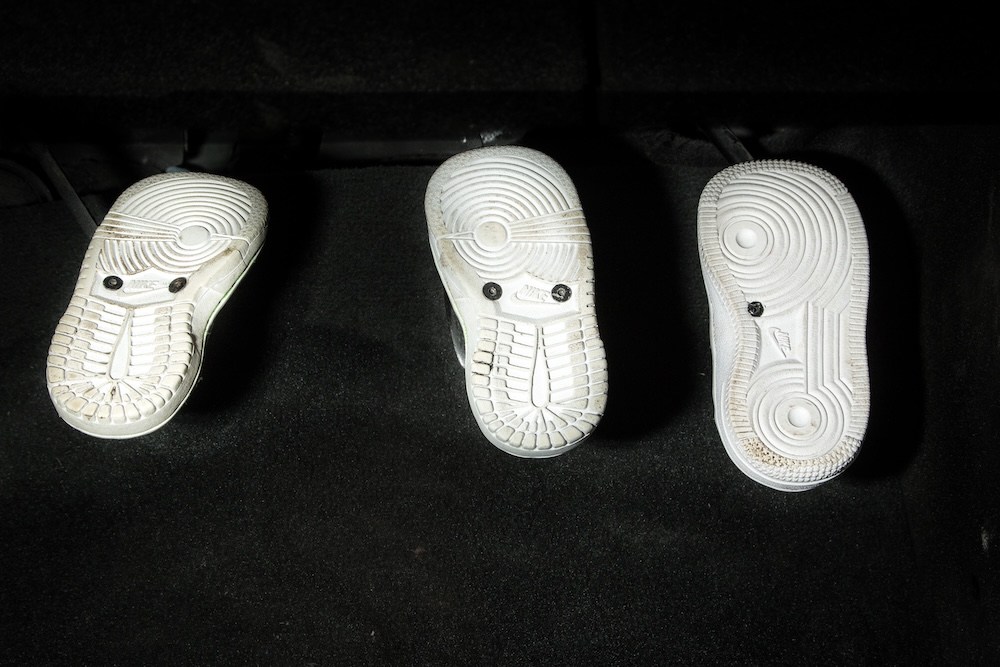
Nike trainers turned into pedals
Some of the smallest modifications carry the biggest stories. Shaun has worn Nike trainers for years and even has a Nike tattoo, so a custom Nike-themed dipstick became another little piece of his personality in the engine bay.
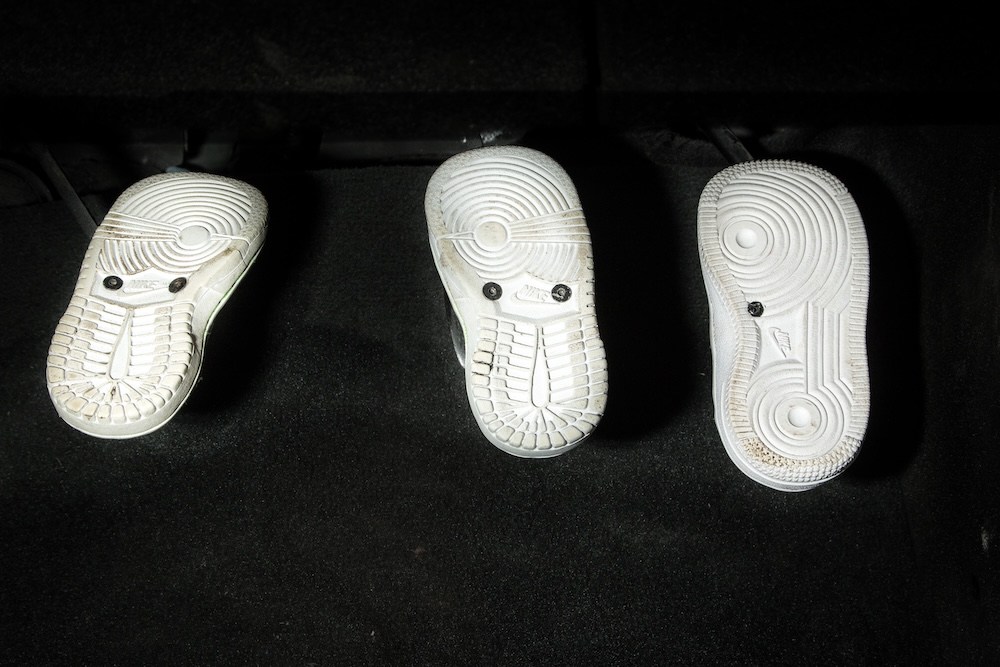
Inside, that idea becomes much more personal. When Shaun’s nephew was younger, he used to buy him trainers. As his nephew grew out of them, Shaun kept some of the shoes, removed the soles and eventually used sections of them on the Civic’s pedals. Almost nobody would notice them at a show without being told. But that’s why they matter.
Those pedals aren’t special because they cost a fortune or add any performance. They’re special because there is a family memory behind them that couldn’t be replicated by simply ordering another part online.
Why Shaun will never sell his modified Honda Civic EK
There are newer, faster and technically more sophisticated ways to modify a Civic today. None of that really matters here. Shaun bought this EK as his first car, started modifying it almost immediately and has now spent 20 years allowing it to evolve alongside him.
It has appeared in Fast Car repeatedly, changed colour several times, worn different wheels, gained different engines and taught Shaun how to fabricate, weld and create things that simply didn’t exist off the shelf. Parts from its previous lives haven’t always been thrown away either. They’ve been preserved, reused or turned into something new, allowing each version of the Civic to carry a little piece of the one before it.
That is why this modified Honda Civic EK works. The 440bhp turbo engine makes it fast. The smoothed widebody makes it distinctive. The huge SSRs, air suspension and custom interior make it impossible to ignore. But those things aren’t really why Shaun still owns it. This Civic contains two decades of memories.
Modern modified-car culture can sometimes feel temporary: buy the car, fit the fashionable parts, photograph it, sell it and move on. Shaun’s Civic is the opposite. He built it when old-school modifying was thriving, kept it when tastes changed and continues to develop it because he still enjoys creating things. After 20 years, calling it a project car almost feels wrong. It’s part of the family.
Shaun has owned the Civic for 20 years. It was his first car and has been continuously modified throughout his ownership.
The car is reported to produce around 440bhp at the crank, with just under 400bhp reaching the wheels.
It uses a 2.2-litre VTEC engine sourced from a Honda Prelude, which has since been fully built and turbocharged.
Yes. Generic arch flares were integrated and smoothed into the body, with the surrounding panels reshaped around the widened SSR wheels.
The car runs an Air Lift-based air-management setup with custom suspension using BC shock components and air bags.
Shaun runs rebuilt SSR split rims. The original centres were retained while the wheels were upsized to 17 inches and substantially widened.
A large proportion of the fabrication, bodywork and modification was completed by Shaun and his friends. The Civic became a platform for learning skills including bodywork, cage fabrication and TIG welding.
Yes. Shaun says the Civic has previously appeared on the Fast Car cover three times during its long build history.